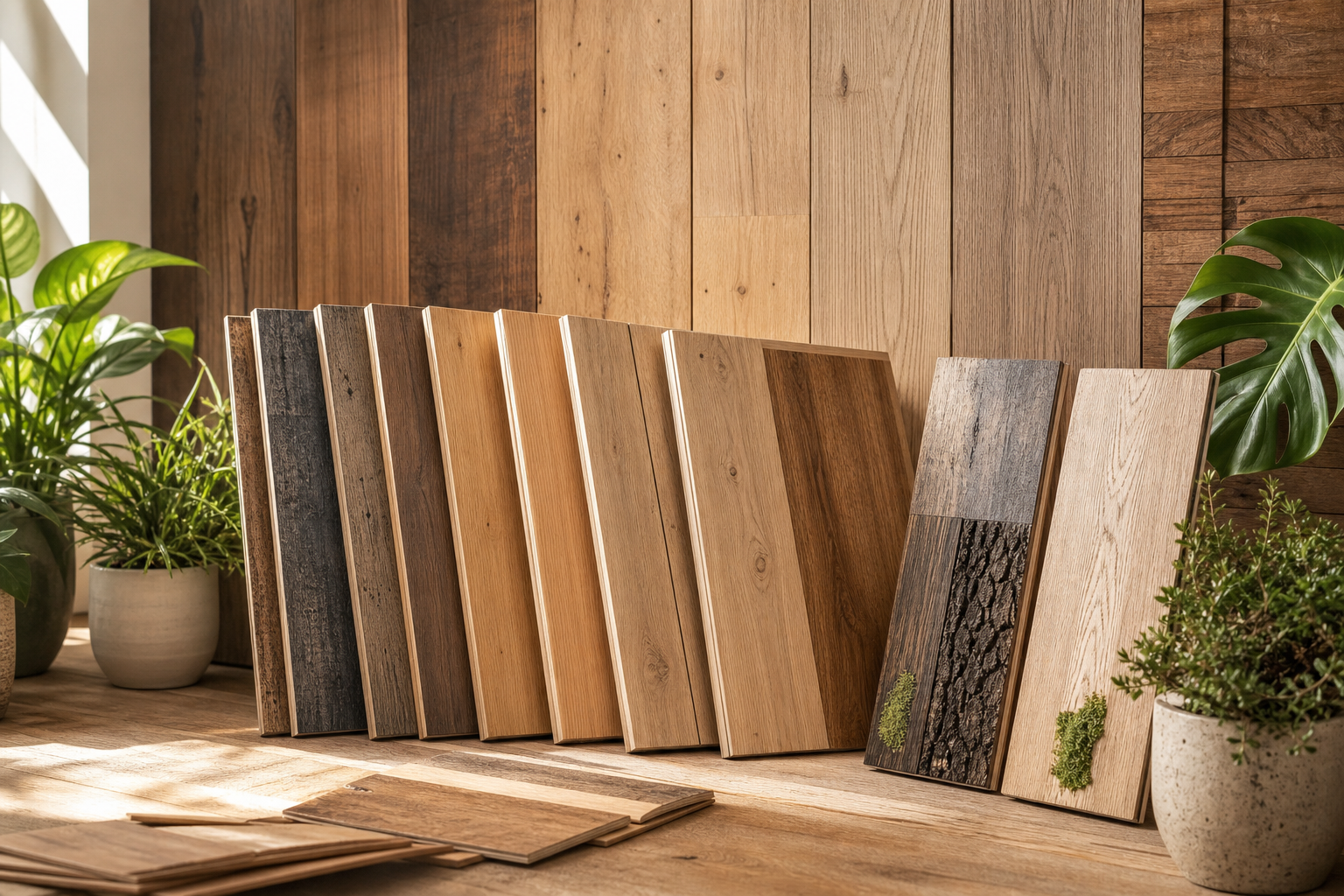
Plenty of shoppers assume sustainable wood flooring means giving up toughness, paying for a label, or settling for a narrow selection. In my experience here in Colorado Springs, that is not true. You can choose eco-friendly hardwood flooring that is responsibly sourced and built to last, but you do have to compare products carefully because not every hardwood floor has the same environmental profile.
The most eco-friendly hardwood flooring options are usually FSC-certified wood, reclaimed wood, and long-lasting engineered or solid hardwood made from responsibly managed forests and low-emission finishes. The best choice depends on where the wood came from, how long the floor will last in your home, and whether it fits Colorado Springs' dry climate without failing early.
What are the most eco-friendly hardwood flooring options?
The most eco-friendly hardwood flooring options are reclaimed hardwood, FSC-certified hardwood, and some engineered hardwood products that use responsibly sourced wood and low-emission adhesives or finishes. A sustainable floor is not just about the tree species. It is also about legal sourcing, manufacturing emissions, and how many decades the floor can stay in service.
In a showroom, I tell buyers to compare options in this order:
- Reclaimed hardwood. Old wood reused from buildings, barns, or industrial spaces avoids harvesting new timber and gives existing material a second life.
- FSC-certified hardwood. Certification from the Forest Stewardship Council helps verify that wood came from responsibly managed forests with standards for environmental and social practices.
- Engineered hardwood from responsible manufacturers. Good engineered products can use less slow-growth hardwood in the wear layer and still deliver long service life, especially in climates like ours.
- Domestic species with clear chain-of-custody information. In many cases, shorter transport distances and easier sourcing transparency help buyers make a better decision.
That last point matters. I have seen two oak floors look nearly identical on a sample board, yet one had better documentation, lower emissions, and a construction better suited to our altitude and dryness. They were not equal environmentally, even if the color was close.
Which certifications and labels actually matter?
The certifications that matter most are the ones tied to forest management, indoor air quality, and legal sourcing. Buyers should look past vague claims like "green," "natural," or "earth friendly" and ask for documentation they can verify. A real label should tell you something specific about where the wood came from or how the product was made.
The main ones worth knowing include:
- FSC. The Forest Stewardship Council is the name most buyers recognize for responsible forestry and chain-of-custody tracking.
- FloorScore. This certification addresses indoor air emissions from flooring products. That matters for adhesives, finishes, and composite components.
- CARB compliance. This is often discussed with composite wood products and formaldehyde emissions. It is not the only thing to check, but it is relevant for engineered constructions.
- Manufacturer transparency. Some brands provide sourcing details, mill location, species origin, and finish chemistry information even when a third-party label is limited.
A weak example is a carton that says "environmentally conscious hardwood." A stronger example is a product sheet that identifies FSC-certified material, FloorScore certification, and a low-VOC finish system. I would always trust the second product more because it gives you something concrete to verify.
Common showroom mistake
Buyers sometimes assume a floor is sustainable because it is made of wood. Wood can be a very good material choice, but sustainability depends on the source forest, the manufacturing process, the finish, and the floor's expected lifespan in your specific home.
How does durability make hardwood flooring more sustainable?
Durability is a sustainability issue because a floor that lasts longer usually uses fewer replacement materials, less packaging, less transportation, and less labor over time. Product longevity is one of the most practical ways to judge eco-friendly hardwood flooring, especially for families who want to buy once and live with the result for years.
The National Wood Flooring Association, through NWFA, consistently emphasizes that real wood floors can last for decades and can often be refinished rather than replaced. That refinishing potential is a major advantage over shorter-life surfaces.
Here in Colorado Springs, the durability conversation has to include climate. Dry air, seasonal humidity swings, and altitude can be hard on the wrong wood construction. If a floor cups, gaps badly, or fails because it was not suited to local conditions, any sustainability benefit drops fast.
That is why I often steer homeowners to compare engineered vs. solid hardwood for Colorado Springs' dry climate before they make a final call. In some homes, a well-built engineered floor is the better long-term choice. In others, solid hardwood still makes excellent sense.
My view after decades in this business is simple. The greenest floor in the brochure is not the greenest floor if it fails in seven years.
Colorado Springs homes in areas like Monument and Falcon often deal with especially dry indoor conditions once heating season starts. That can make construction quality, board width, and species choice just as important as the environmental label on the box.
What should Colorado Springs buyers check before buying?
Colorado Springs buyers should check construction, species hardness, board width, finish type, refinishing potential, and installation requirements before deciding a hardwood floor is both sustainable and durable. The best showroom comparison is practical, not emotional. You want proof that the floor can handle your household and our local climate.
Use this buying checklist:
Showroom checklist for sustainable hardwood
- Ask where the wood was sourced and whether it is FSC-certified.
- Check for FloorScore or other indoor air quality documentation.
- Confirm the wear layer thickness on engineered hardwood.
- Ask how many times the floor can realistically be refinished, if any.
- Compare species for dent resistance. Oak, hickory, and maple perform differently.
- Review finish type and expected maintenance.
- Ask how the product performs in dry climates and over radiant heat, if applicable.
- Make sure the installation method and subfloor prep are appropriate for your home.
Board width matters too. Wider planks can be beautiful, but they need the right construction for Colorado conditions. Our guide on why board width and wood species matter for hardwood longevity in Colorado Springs goes deeper on that point.
If you have dogs or active kids, do not skip the finish conversation. A good finish can extend the useful life of the floor and cut down on early wear. We break that down in how finish type affects hardwood floor life in Colorado Springs homes.
Myth: The hardest wood is always the most sustainable choice.
Reality: Hardness helps with dents and wear, but the better sustainable choice may be a slightly different species or construction that is responsibly sourced, stable in Colorado's climate, and more likely to stay in service longer.
Is engineered hardwood more eco-friendly than solid hardwood?
Engineered hardwood can be more eco-friendly in some cases, but not automatically. It may use less hardwood per plank and often performs better in dry, variable climates. Still, the environmental value depends on core materials, adhesives, emissions, and how long the product lasts once installed.
There is no honest one-size-fits-all answer here. Solid hardwood has clear strengths:
- Long service life
- Refinishing potential over many years
- Simple composition with no plywood or HDF core
Engineered hardwood has its own strengths:
- Better dimensional stability in many Colorado homes
- Efficient use of premium hardwood in the top layer
- Strong performance in remodels where solid wood may be less practical
I usually tell shoppers to compare failure risk just as closely as environmental claims. A floor that is technically "greener" on paper but less stable in your house may not be the smarter purchase. For a closer look at tradeoffs, see prefinished or site-finished hardwood for Colorado homes and the climate-focused guidance on engineered versus solid hardwood above.
John Hughes's Insights
I have been helping families choose floors for more than 40 years, and I can tell you the honest conversation is usually not about finding the "greenest" sample in the rack. It is about finding the floor that will still be doing its job after dogs, kids, moving furniture, and ten Colorado winters. A sustainable choice has to survive real life.
In my own approach, I start with three things. Where did it come from. How is it built. Will it hold up in this house. If a product rep cannot answer those questions clearly, I get cautious fast. Customers do not need a sales pitch. They need straight information. That is how you avoid paying twice for flooring, and in my book, avoiding replacement is one of the most responsible choices you can make.
How can you avoid green marketing and compare products honestly?
You can avoid green marketing by asking for measurable facts, not broad promises. Compare documentation, warranty terms, construction details, finish chemistry, and expected lifespan. If two products are priced differently, make the salesperson explain what you are actually getting besides a nicer display board.
Ask these direct questions in the showroom:
- Is this wood certified by FSC or another recognized standard?
- What indoor air quality certification does it carry?
- What is the wear layer thickness or total solid wood thickness?
- How does this floor perform in Colorado's dry climate?
- Can it be refinished, and if so, how many times?
- What finish is on it, and how is it maintained?
- Who is installing it, and what acclimation steps are required?
Installation matters more than many buyers realize. Even a strong product can underperform if the prep work or moisture testing is poor. That is why I always encourage homeowners to review how to tell if a flooring installer will do the job right before you sign a contract. Good material and good installation belong in the same conversation.
"The customer always comes first. If a floor is not right for your house, your budget, or your lifestyle, it is my job to say that plainly." John Hughes
Frequently Asked Questions
Is reclaimed wood always the best environmental choice?
Not always. Reclaimed wood can be an excellent option because it reuses existing material, but availability, milling quality, finish products, and installation requirements still matter.
Does domestic hardwood automatically mean lower environmental impact?
No. Domestic sourcing can help with transparency and may reduce transport distance, but forest practices, manufacturing, and product lifespan still need to be considered.
What wood species are good for a busy family home?
Oak, hickory, and maple are common choices for active households, though the best fit depends on the finish, plank style, and your tolerance for visible wear.
Are low-VOC finishes important?
Yes. Low-emission finishes and adhesives can improve indoor air quality, especially right after installation. Ask for certification or product documentation instead of relying on a verbal claim.
Can eco-friendly hardwood flooring work with pets?
Yes, if you choose the right species, finish, and construction. Scratch resistance, maintenance needs, and refinishing potential should all be part of the decision.
Compare sustainable hardwood with a local expert
If you are trying to sort through eco-friendly hardwood flooring without getting buried in vague claims, visit O'Briens Carpet One Floor & Home. We will help you compare certifications, construction, durability, and real fit for your Colorado Springs home so you can buy with open eyes.
Book your free in-home flooring measure and consultationFor Colorado Springs homeowners, remodelers, and property managers, the best eco-friendly hardwood flooring is the one that pairs responsible sourcing with long service life in our local climate. If you want help comparing real options instead of marketing language, start with a showroom conversation and a home-specific plan.
Explore more, or reach out directly to O'Briens Carpet One Floor & Home in Colorado Springs, CO.