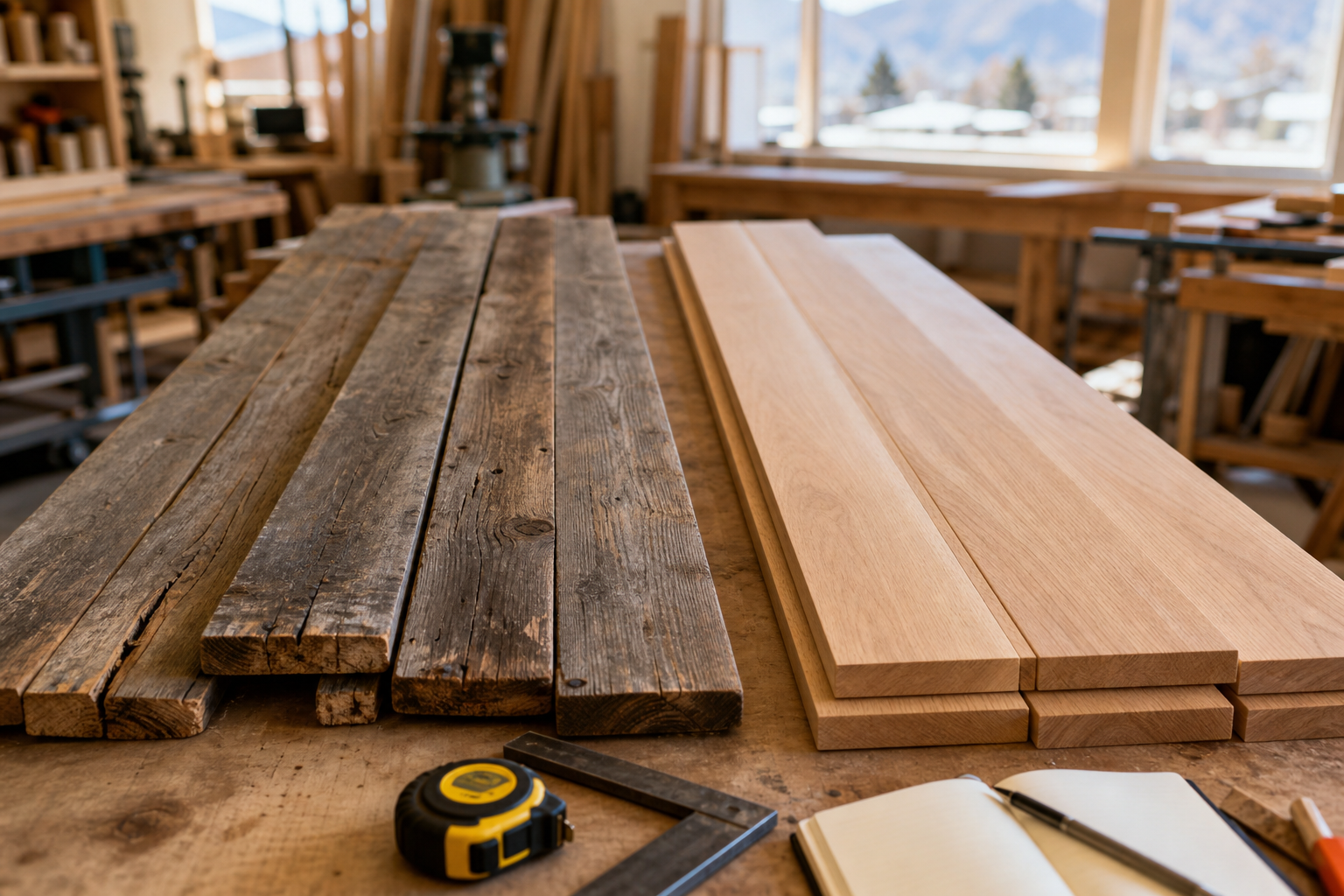
A 1920s bungalow in Old Colorado City and a newer home in Wolf Ranch can both look great in hardwood, but they usually should not be shopping the same way. Every spring and summer in Colorado Springs, remodel season picks up, and I see the same question come across the table. People want the character of old wood, but they also want a floor that installs cleanly, matches from room to room, and stays manageable in our dry climate.
No, reclaimed hardwood is not automatically better than new hardwood. Reclaimed wood can offer unmatched age and character, but responsibly produced new hardwood usually wins on consistency, availability, simpler installation, and easier future repairs. The better choice depends on whether you value one-of-a-kind appearance more than tight board matching, predictable cost, and straightforward maintenance.
If you are comparing reclaimed wood, salvaged flooring, and new hardwood for a remodel, the real differences are practical. That is especially true with reclaimed hardwood Colorado Springs projects, where homeowners need to think about seasonal humidity swings, lead times, and how closely new areas must match existing rooms.
Is reclaimed hardwood better than new hardwood?
Reclaimed hardwood is better only for certain priorities. It is usually the better fit if you want historic character, visible variation, and do not mind paying more for sorting, prep, and occasional imperfections. New hardwood is usually better if you need reliable sizing, wider product choice, cleaner milling, and easier board replacement later.
I tell homeowners this plainly. Old wood is not magic, and new wood is not boring. They serve different jobs.
Here is the side-by-side view most buyers actually need:
| Option | Best Strength | Biggest Tradeoff | Best Fit |
|---|---|---|---|
| Reclaimed wood | Strong character, aged patina, unique grain | Higher prep cost, variable sizing, limited matching | Statement rooms, older homes, owners who want variation |
| Salvaged flooring | Can match older existing floors if source is right | Supply is inconsistent, wear levels vary | Patching or extending existing hardwood |
| Responsibly produced new hardwood | Consistency, easier installation, better availability | Less age character out of the box | Whole-home remodels, tighter budgets, faster timelines |
According to the U.S. Forest Service, wood flooring performance is closely tied to moisture conditions and installation practices, not just species. That matters in Colorado Springs, where indoor humidity often drops low enough in winter to widen gaps if the product was not acclimated and installed correctly.
In Colorado Springs, most hardwood projects move fastest from late spring through early fall, but our dry air is part of the decision all year. Homes in Monument, Falcon, and higher elevations often see sharper humidity swings than homeowners expect, which makes board consistency and acclimation more than a technical footnote.
What is the actual difference between reclaimed wood, salvaged flooring, and new hardwood?
The difference is origin and processing. Reclaimed wood usually comes from older structures and is re-milled for new use. Salvaged flooring is existing flooring taken up and reused more directly. New hardwood is freshly milled from newly harvested lumber and produced to current sizing standards.
Those categories get blurred in marketing, so here is the practical breakdown.
- Reclaimed wood. Often pulled from barns, factories, warehouses, homes, or other older buildings. It may be re-sawn into flooring from old beams or joists.
- Salvaged flooring. Existing tongue-and-groove boards removed from another property and reused as flooring again, sometimes with only limited refinishing.
- New hardwood. Newly milled flooring made to current production tolerances, commonly sold unfinished or prefinished in standard widths and grades.
The reason this matters is simple. Reclaimed and salvaged material often carry nail holes, end checks, shorter average board lengths, and more waste. New flooring usually gives you better milling accuracy and more predictable coverage per box.
How available is each option in Colorado Springs?
New hardwood is by far the easiest to source. Reclaimed and salvaged material can work, but buyers should expect more waiting, more hunting, and less certainty on getting the same material twice.
For a typical Colorado Springs remodel, lead times often look like this:
- New hardwood. Common lines may be available in days to a few weeks.
- Reclaimed wood. Expect sourcing, milling, and sorting time. It can take several weeks or longer depending on the lot.
- Salvaged flooring. Fast only if the right match already exists. Slow if you need to chase a species, width, and age profile.
That is one reason whole-home remodels often lean toward new hardwood. If you are flooring 800, 1,200, or 2,000 square feet, availability starts to matter a lot more than it did in the inspiration photos.
How much character is too much?
Character is a feature until it disrupts the room. Reclaimed wood usually has more color range, mineral streaks, old fastener marks, patched knots, and texture. Some homeowners love that. Others realize halfway through that they wanted “warm and natural,” not “every board tells a different story.”
A weak example is choosing reclaimed boards for a bright, open main floor and expecting every room to read calm and uniform. A stronger example is using reclaimed material in a study, dining room, or historic home where variation adds to the architecture.
"If your eye wants every board to match, reclaimed probably is not your best friend. If your eye likes history and variation, it can be beautiful." , John Hughes
Which option is easiest to repair and match later?
New hardwood is usually easiest to repair and match later. Salvaged flooring can be helpful for patching older floors if you can find the right material. Reclaimed wood is often the hardest to match because its wear, color, milling, and aging are rarely repeatable.
This is where many buyers change direction. They start out focused on looks, then remember they have kids, dogs, furniture moves, or future remodeling plans.
- New hardwood gives you the best chance of ordering attic stock, replacing damaged boards, or buying the same line later.
- Salvaged flooring can be a lifesaver for patching older homes, especially if existing dimensions are no longer standard.
- Reclaimed wood often means “close, not exact” if a repair is needed 3 or 5 years down the road.
The National Wood Flooring Association, at NWFA, notes that wood floors can last for decades and be refinished multiple times, but that assumes proper installation and a floor with enough wear layer to work with. Thickness and construction matter. That is why I want buyers to think past installation day.
Common mistake: budgeting reclaimed wood like standard hardwood
The board price is only part of the story. Older material often needs denailing, trimming, extra waste allowance, moisture testing, milling correction, and more hand selection during installation. A floor that looks “comparable” by square-foot price can end up noticeably higher once labor and yield loss are counted.
Can salvaged flooring be the best option for older homes?
Yes, especially for patching or extending existing floors in historic or semi-historic homes. Salvaged flooring can be the best choice when the real goal is not a brand-new look but a believable continuation of what is already there.
In older neighborhoods around Colorado Springs, I sometimes see 2 1/4-inch oak or other legacy dimensions that do not blend naturally with newer products. In those cases, salvaged flooring may solve a problem that new hardwood cannot solve cleanly.
How do consistency and milling quality compare?
New hardwood usually has the cleanest consistency and milling quality. Reclaimed and salvaged materials often need more sorting because board thickness, tongue profile, end squareness, and straightness can vary from piece to piece.
That does not make old material bad. It means expectations should be honest.
Here is what consistency affects on a real job:
- How flat the floor installs
- How tight the seams appear
- How much cutting and culling happens on site
- How much extra material you should order
- How long the installation takes
For many new hardwood jobs, waste may stay closer to standard planning ranges. With reclaimed or salvaged material, you may need a higher overage because some boards will be unusable, too short for key areas, or visually wrong for the field. That can push material orders and labor higher by 10 percent, 15 percent, or more depending on the lot.
Myth: Old wood is automatically stronger and more stable because it has already aged for decades.
Reality: Age alone does not guarantee better flooring. Old lumber can be dense and beautiful, but reused material may also contain hidden fastener damage, previous movement, uneven moisture history, or inconsistent milling. Stability still depends on species, cutting, storage, acclimation, and installation.
I have been doing this long enough to know that the prettiest board in a sample stack can be the most troublesome board in the house if it is not milled right.
What should homeowners expect for maintenance over 10 to 20 years?
All real hardwood needs routine care, but reclaimed wood often asks for more tolerance rather than more work. New hardwood tends to be easier to maintain if you want a cleaner, more uniform appearance over time.
Maintenance differences usually show up in these ways:
- Surface wear visibility. On heavily varied reclaimed floors, new scratches may hide better. On smoother, more uniform new hardwood, damage can stand out more.
- Cleaning expectations. Texture, bevels, and open grain in older-looking products can trap more dust and fine debris.
- Refinishing choices. Some reclaimed floors refinish beautifully, but board condition and prior milling limit options.
- Spot repair realism. New hardwood generally gives you better odds of replacing a few boards without visual drama.
The U.S. Environmental Protection Agency notes that indoor moisture conditions affect building materials broadly, and hardwood is no exception. In Colorado’s dry climate, I often recommend buyers think hard about finish type and maintenance expectations, not just source material. If you are comparing finish systems, our guide on prefinished versus site-finished hardwood for Colorado homes helps with that part of the decision.
What does budgeting really look like for older materials?
Older materials usually cost more than buyers expect. The premium is not just about rarity. It is about labor, waste, and unpredictability.
Budget drivers commonly include:
- Material availability and lot size
- Species and board width
- How much remilling or denailing is required
- Waste allowance, often higher than standard new flooring jobs
- Subfloor correction and prep time
- Whether you are blending into existing hardwood
For some homes, reclaimed makes sense because the look is the priority. For others, a good new hardwood gives 80 to 90 percent of the visual warmth with fewer surprises. And if budget pressure is the bigger issue than wood source, it may be worth comparing alternatives like modern laminate for budget-conscious upgrades or even reviewing hardwood versus LVP at high altitude in Colorado Springs.
Buyer checklist before choosing reclaimed, salvaged, or new hardwood
- Decide if your goal is exact consistency or visible character.
- Ask whether future repairs need to match closely.
- Confirm the board width, thickness, and wear layer.
- Build in extra budget for waste and hand labor on older materials.
- Ask how much product can be held back for future repairs.
- Factor in Colorado Springs humidity swings and acclimation time.
- Get a real measure before comparing total project cost.
Who is each hardwood option best for in a Colorado Springs remodel?
Reclaimed wood is best for homeowners who want originality and accept variation. Salvaged flooring is best for matching or extending older floors. New hardwood is best for buyers who want predictability, cleaner installation, and simpler long-term planning.
That buyer fit usually looks like this:
- Choose reclaimed wood if you are remodeling a character home, want texture and story, and can handle longer lead times and a less uniform final look.
- Choose salvaged flooring if you are trying to make an addition, patch, or extension look believable beside existing older hardwood.
- Choose new hardwood if you want broader style choice, better milling consistency, and easier maintenance planning for a busy family home.
For many reclaimed hardwood Colorado Springs shoppers, the answer is not all-or-nothing. A lot of the best projects mix priorities. New hardwood may make more sense in the main living areas, while reclaimed wood becomes an accent in a study, staircase landing, or one standout room.
If you are sorting through reclaimed hardwood Colorado Springs options, do not judge by a 12-inch sample alone. Ask what the full lot looks like, what percentage may be culled, how repairs will be handled, and what happens if you need 40 more square feet later. That is the honest way to compare old material against new.
I still believe the customer always comes first, and that means telling the truth even if the answer is less romantic than the photo that started the project.
Still deciding if reclaimed hardwood is better than new hardwood for your home?
If you want a straight answer based on your rooms, your budget, and your existing floors, we can help you compare reclaimed, salvaged, and new hardwood without the sales pressure. Visit O'Briens Carpet One Floor & Home to book a free in-home flooring measure and consultation with a local expert in Colorado Springs. If you are weighing reclaimed hardwood Colorado Springs choices, this is the easiest way to find out what truly fits your remodel.
Book your free in-home flooring measure and consultation