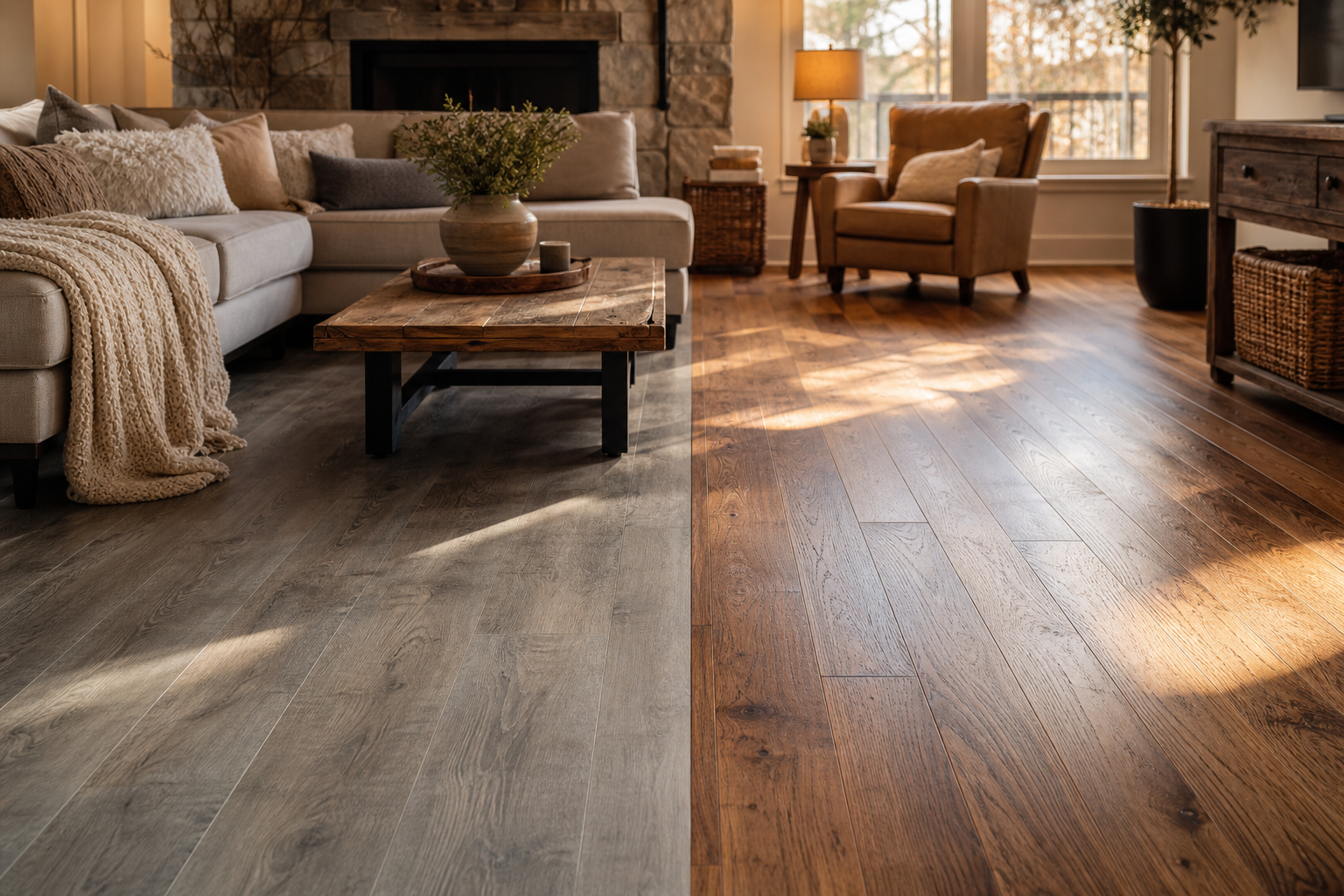
Myth: the better-looking floor is automatically the better choice. Reality: for most LVP vs hardwood Colorado Springs decisions, appearance is only one piece of the puzzle. In Colorado Springs, our dry air, fast weather swings, snow tracked in from the driveway, and busy family life often matter more than a showroom first impression. I have helped homeowners across Colorado Springs, Monument, Falcon, and Fountain compare both, and the right answer usually comes down to climate fit, room use, budget, and how much upkeep you will actually do.
Luxury vinyl plank is often the better practical choice for high-altitude homes because it handles moisture, temperature swings, and daily wear with less fuss. Hardwood still makes more sense if you want a natural wood floor you can refinish for decades and you are willing to manage indoor humidity and maintenance carefully.
Myth: Hardwood always outperforms LVP because it is a premium material.
Reality: In Colorado Springs, premium only matters if the floor fits the house, the climate, and the way the room is used. A material that moves, gaps, scratches, or makes you nervous around pets is not the better value just because it costs more.
Is luxury vinyl plank better than hardwood for high-altitude homes?
Yes, luxury vinyl plank is often better for high-altitude homes if your priorities are stability, easy care, and lower upfront cost. Hardwood is better if long-term character, real wood texture, and refinishing potential matter more and you are prepared for climate-related movement.
That is the honest answer I give people during LVP vs hardwood Colorado Springs consultations. High altitude itself is not the only issue. The bigger factor is what comes with it here in El Paso County: dry indoor air in winter, strong sun, snow and grit at entry points, and HVAC systems that can pull even more moisture out of the house.
The National Wood Flooring Association recommends maintaining interior relative humidity between 35 and 55 percent for wood flooring performance. In many Colorado homes, winter humidity can drop well below that range without humidification. That is where hardwood can shrink, show seasonal gaps, or develop more noticeable movement. LVP is not immune to bad installation or extreme conditions, but it is generally more dimensionally stable in these homes.
- Choose LVP first for basements, mudrooms, rentals, homes with large dogs, and households that want low maintenance.
- Choose hardwood first for main living spaces where natural material matters most and the homeowner accepts routine care and climate control.
- Pause and compare both if resale image is important but the house has kids, pets, or uneven humidity. This is where side-by-side sample comparisons help.
I have been doing this a long time, and the floor that wins on paper is not always the one that works best after the first winter.
Which floor handles Colorado Springs climate better?
LVP usually handles Colorado Springs climate better because it is less sensitive to dry air and seasonal movement. Hardwood can perform very well too, but it needs better humidity control and more careful product selection, especially in wide-plank styles.
Colorado Springs homes deal with a mix of conditions that buyers sometimes underestimate:
- Dry winters that can pull moisture from wood.
- Snowmelt and slush at entries from November into spring.
- Big day-to-night temperature changes.
- Intense sun exposure, especially in south-facing rooms and homes with large windows.
Dimensional stability matters here. LVP is built in layers and does not react to humidity the way real wood does. Hardwood is a living material even after installation. It expands and contracts with moisture changes. That does not make hardwood a bad choice. It means the install, species, plank width, and indoor humidity matter more in Colorado Springs than they might in a milder climate.
In neighborhoods from Briargate to Broadmoor, I see the same pattern. South-facing rooms with lots of glass and forced-air heat can be the toughest spots for hardwood movement, while entry areas in Monument and Falcon often take the brunt of snow, gravel, and de-icing residue.
A weaker way to shop is to ask, "Which one looks more like wood?" A stronger way is to ask:
- Will this room stay within a reasonable humidity range year-round?
- How much tracked-in moisture and grit will hit this floor?
- Am I okay with normal seasonal movement in real wood?
What does LVP vs hardwood cost in Colorado Springs?
LVP usually costs less upfront and less to maintain, while hardwood usually costs more initially but can last for decades if cared for properly. The better value depends on how long you plan to keep the floor and how hard the room is on surfaces.
For most LVP vs hardwood Colorado Springs shoppers, budget is not just product price. It is the full cost of ownership.
Cost comparison checklist
- LVP: Lower material cost in many cases, often faster installation, less chance of future refinishing costs.
- Hardwood: Higher material and installation cost, possible added cost for humidity management, but refinishing can extend life instead of full replacement.
- Subfloor prep: This can affect both. An uneven subfloor can create issues under floating LVP and hardwood alike.
- Lifestyle cost: A floor that shows scratches or moisture marks quickly can feel expensive even if the invoice looked fine.
According to Remodeling magazine's Cost vs. Value report, hardwood flooring projects have historically remained strong on resale appeal, though actual return varies by market and condition. That matters if you are upgrading a long-term home or preparing a property for sale. But for a family replacing worn flooring in a busy home, practical savings often favor LVP.
My rule is simple. If you are stretching the budget just to say you bought hardwood, stop and reconsider. A floor should serve the house, not strain it.
Which is easier to maintain in a busy household?
LVP is easier to maintain day to day because it resists water better and shrugs off normal family traffic. Hardwood needs more caution with spills, pet nails, grit, and cleaning products, especially in active homes.
This is where room use matters more than appearance. Families in Colorado Springs often ask me to compare the two for homes with kids, dogs, and frequent in-and-out traffic. In that setting, LVP has a practical edge.
Everyday durability comparison:
- Spills: LVP gives you more forgiveness. Hardwood wants quick cleanup.
- Scratches: Both can scratch, but hardwood scratches are often more visible. Some LVP wear layers hold up very well to pets and traffic.
- Dents: Hardwood can dent from dropped objects or furniture. LVP resists some impact better, depending on product construction.
- Cleaning: LVP typically needs sweeping and a manufacturer-approved cleaner. Hardwood also needs careful cleaning, but too much water is a problem.
Common mistake
People often put hardwood in the whole house because they love the look, then regret it in mudrooms, kitchens, or pet zones. Mixed-material plans often work better. Hardwood in the living areas, LVP in moisture-prone or hard-use rooms, and the home still feels consistent when the colors are compared side by side.
That side-by-side comparison is a big part of what we do in consultations. Sometimes the best answer is not one product everywhere.
Does hardwood's refinishing potential outweigh LVP's convenience?
Hardwood's biggest long-term advantage is refinishing potential. LVP's biggest long-term advantage is convenience. If you want to refresh a floor instead of replace it years down the road, hardwood has a clear edge. If you want fewer worries in the meantime, LVP usually wins.
This is one of the most important parts of the LVP vs hardwood Colorado Springs conversation. Hardwood can often be sanded and refinished multiple times, depending on the product and wear layer. That can be a real benefit in a forever home. Small scratches, dated stain color, and surface wear do not always mean replacement.
LVP generally cannot be refinished. Once it is worn or damaged beyond repair, it is replaced. But many homeowners accept that tradeoff because they get easier ownership for years before that day comes.
If you love the idea of a floor aging with the home, hardwood has a character LVP cannot copy completely. If you want a floor that asks less from you every week, LVP makes that case well.
What rooms are best for LVP, and what rooms are best for hardwood?
LVP is usually the better fit for basements, kitchens, baths, laundry areas, mudrooms, and rentals. Hardwood is usually the better fit for living rooms, dining rooms, bedrooms, and spaces where warmth, natural texture, and long-term refinishing matter most.
Room-by-room fit is often the fastest way to make the decision.
- Basements: LVP. Colorado Springs basements can have moisture variability, and vinyl is usually the safer choice.
- Main-floor family rooms: Either can work. Pick based on pets, kids, and your tolerance for wear.
- Kitchens: Usually LVP for practical durability, though some homeowners still prefer hardwood for continuity.
- Bedrooms: Hardwood if you want warmth and natural character. LVP if you want a lower-cost whole-house update.
- Rental properties: LVP in most cases because replacement and upkeep are easier to manage.
Property managers especially tend to value predictability. A good-looking floor that can stand up to tenant turnover is often more sensible than a premium material that needs more attention.
John Hughes's Insights
I have lived and worked in Colorado Springs for more than 40 years, and I can tell you this decision gets easier the minute people stop trying to "win" the flooring purchase. The goal is not to buy the most expensive floor. The goal is to buy the right floor for your life. I have seen beautiful hardwood floors make homeowners nervous every winter because the house was too dry. I have also seen LVP solve a lot of real-world problems for families with dogs, kids, and busy schedules.
My advice is to be honest about how you live. If you want real wood and you will care for it, hardwood can be a great investment. If you want durability and simpler upkeep, there is no shame in choosing LVP. The customer always comes first, and that means telling the truth, not pushing one product.
How should homeowners decide in an LVP vs hardwood Colorado Springs consultation?
The best way to decide is to compare both materials side by side while ranking four factors: climate tolerance, budget, maintenance expectations, and room use. Once those are clear, the right product usually becomes obvious.
Here is the decision matrix I use with homeowners:
- Climate: If your home runs dry in winter and you do not plan to humidify, lean LVP.
- Budget: If upfront cost needs to stay tighter, lean LVP. If you are investing for decades, hardwood stays in the running.
- Maintenance: If you want simple cleaning and less worry, lean LVP.
- Room use: If the room sees moisture, pets, or heavy traffic, lean LVP. If it is a lower-risk showpiece living area, hardwood may be worth it.
- Long-term plan: If refinishing matters, lean hardwood.
"In Colorado Springs, the right floor is the one that still makes sense after a dry winter, a muddy spring, and a few years of real family traffic." , John Hughes
That is why LVP vs hardwood Colorado Springs should be a comparison, not a sales pitch. Samples, room context, and honest tradeoffs tell you more than a display board ever will.
Frequently Asked Questions
Is LVP more stable than hardwood in Colorado Springs?
Yes. LVP is generally more dimensionally stable than hardwood in Colorado Springs because it is less affected by the dry climate and seasonal humidity swings.
Does hardwood add more value than LVP?
It can, especially in homes where buyers expect real wood. But value depends on home price point, neighborhood expectations, and condition. A worn hardwood floor can hurt as much as a good LVP can help.
Can hardwood work well at high altitude?
Yes, with the right product, quality installation, and steady indoor humidity. It just asks more from the homeowner than LVP does.
Is LVP waterproof?
Many LVP products are highly water resistant or waterproof at the plank level, but the whole floor system still depends on installation details and subfloor conditions.
What is best for homes with pets and kids?
In most cases, LVP. It is usually easier to live with in high-traffic family homes.
Should I use one flooring type everywhere?
Not always. Many Colorado Springs homes benefit from mixing hardwood in lower-risk living spaces with LVP in basements, kitchens, baths, or entry-heavy zones.
Compare LVP and hardwood side by side before you decide
If you are weighing LVP vs hardwood Colorado Springs, the smartest next step is to compare real samples with your rooms, lighting, traffic, and budget in mind. At O'Briens Carpet One Floor & Home, we help Colorado Springs homeowners make practical choices based on climate, maintenance, and buyer fit, not pressure. Book a free in-home flooring measure and consultation to see which option makes more sense for your home.
Book your free in-home flooring measure and consultationExplore more, or reach out directly to O'Briens Carpet One Floor & Home in Colorado Springs, CO.