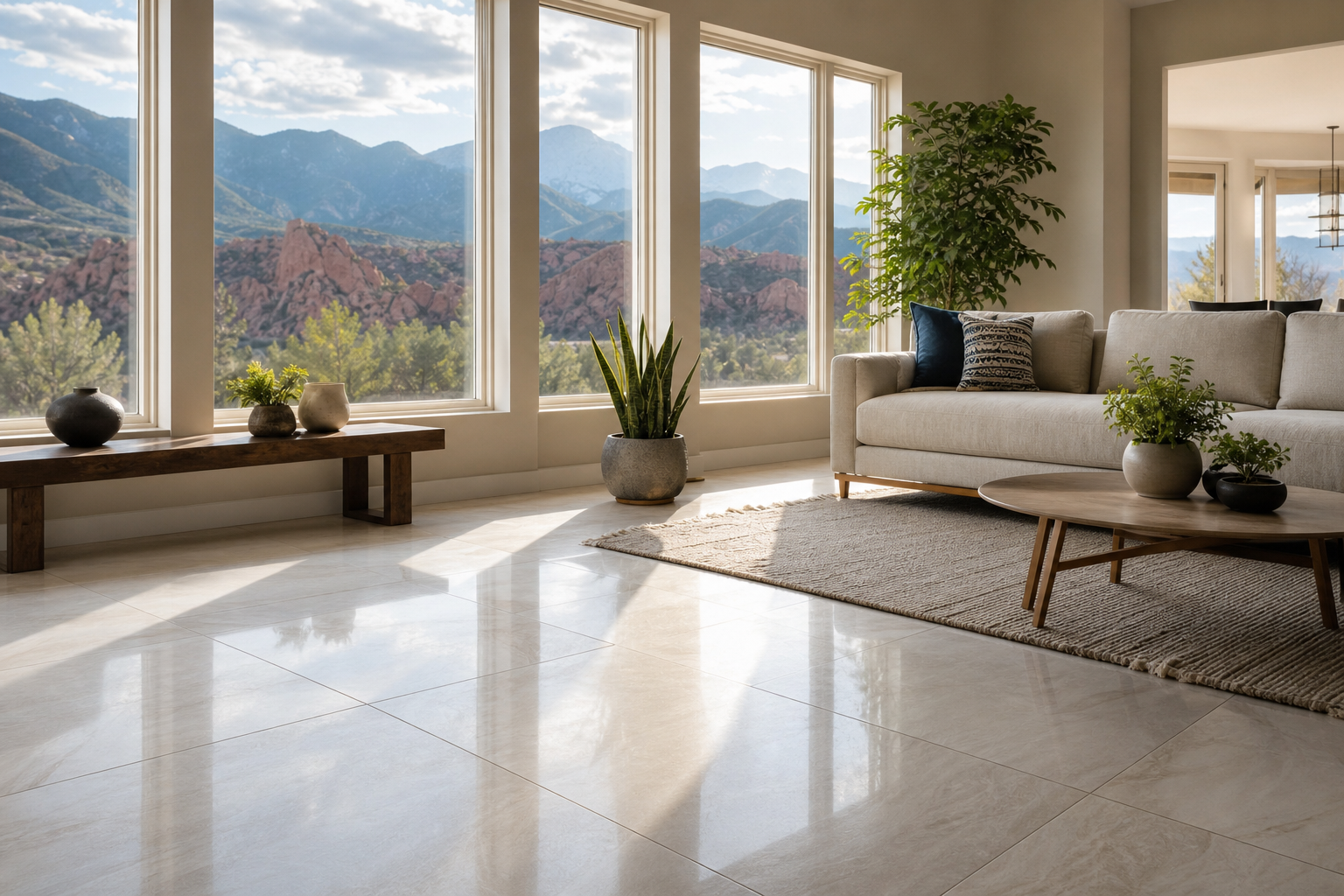
Colorado Springs summers are warm, dry, and bright, and that leads a lot of homeowners to ask if changing floors can make the house feel cooler. The short answer is yes, tile can help a room feel cooler underfoot and can support a cooler-feeling home, but it is not a substitute for shade, insulation, or air conditioning. If you are shopping for the coolest tile flooring for summer, the best choice depends on the tile material, the room, and how much sun that space gets in the afternoon.
Porcelain, ceramic, and some natural stone tiles are the best options for keeping a home cool because they hold less heat underfoot than carpet and do not insulate your feet from the slab or subfloor. Porcelain is usually the strongest all-around pick for Colorado Springs homes because it stays cool, handles traffic well, and works in sunny kitchens, entries, and bathrooms.
Which tiles are best for keeping my home cool?
Porcelain tile is usually the best answer for most homes, followed by ceramic tile, then selected natural stone if you like that look and are prepared for the maintenance. If your goal is the coolest tile flooring for summer, you want a surface that feels cool to the touch, handles strong sunlight, and makes sense for your daily life.
Here is how I break it down for Colorado Springs homeowners:
- Porcelain tile. Dense, durable, and one of the best all-around choices for warm weather comfort. It resists wear, handles busy households, and comes in many looks.
- Ceramic tile. Also a good cooling choice, often at a lower price point than porcelain. It works well in many rooms, though some products are a bit less dense and less tough for heavy traffic.
- Natural stone. Stone can feel pleasantly cool, especially travertine, slate, or marble, but it usually needs more care and sealing than porcelain.
Color matters less than people think. A pale tile may reflect more light visually, but the main comfort factor inside your home is the tile's thermal behavior and the room itself, not just whether the tile is beige or gray.
If you are comparing materials for kitchens or baths, our guide on porcelain, ceramic, or natural stone for Colorado bathrooms and kitchens goes deeper on the tradeoffs.
How does tile actually help a home feel cooler?
Tile helps mostly through comfort and heat transfer, not by magically lowering the thermostat. It feels cool because it conducts heat away from your feet faster than carpet or many other floor coverings, and it does not trap warmth the same way soft flooring does.
That cool sensation matters. The U.S. Environmental Protection Agency explains that thermal comfort is influenced not just by air temperature, but also by surface temperatures and radiant heat. In plain English, a room can feel more comfortable when the surfaces around you are not holding warmth.
There are a few reasons tile gets that reputation:
- High thermal conductivity. Tile transfers heat efficiently, so your bare feet feel cooler faster.
- Less insulation at the surface. Carpet and pad hold warmth near your feet. Tile does not.
- Good thermal mass. Tile can absorb heat during the day and release it later, which can be helpful in homes with smart shading and ventilation.
That said, I always tell customers the truth. Tile can make a room feel cooler and more comfortable, but it will not make a west-facing bonus room perform like it has a brand-new HVAC system. Floors are one piece of the puzzle.
In Colorado Springs, especially in neighborhoods with strong afternoon sun and big south or west windows, floor comfort changes a lot from room to room. A shaded north-facing kitchen in Monument will not behave the same as a west-facing living room in Fountain with large glass doors.
Which rooms see the biggest difference with tile in summer?
Kitchens, bathrooms, mudrooms, laundry rooms, and sun-exposed main living areas usually show the biggest comfort difference. Tile is most noticeable where you walk barefoot, where sunlight pours in, or where other flooring tends to feel stuffy in July.
The best locations often include:
- Kitchens. Constant foot traffic, cooking heat, and frequent cleaning make tile a natural fit.
- Bathrooms. Cool underfoot in summer, water-friendly year-round.
- Entries and mudrooms. Durable and practical for dust, grit, and wet shoes after summer storms.
- Main-floor rooms with direct sun. Especially if you have large windows facing south or west.
A weaker way to choose flooring is this: "I want the coolest tile flooring for summer, so I should tile the entire house." A stronger approach is this: "I want cooler-feeling floors where my family notices it most, especially the kitchen, bath, and sunny traffic zones." That usually gives homeowners a better result for the budget.
If you are balancing cooling comfort with softer spaces for family rooms or bedrooms, our article on LVP or carpet for family rooms in Colorado Springs households can help you think through those room-by-room decisions.
Common mistake: treating every room the same
Homeowners sometimes assume one flooring product should solve every problem in the house. In reality, the room that gets morning sun, the room where the dogs run in, and the upstairs bedroom over a hot garage may each need a different answer.
Does room orientation matter more than tile choice?
Yes, room orientation can matter just as much as the tile itself. A west-facing room with large windows may still warm up noticeably, even with cool-feeling tile, while a shaded north-facing room may feel comfortable with almost any hard surface.
In Colorado Springs, sunlight is strong because of our elevation. According to the National Renewable Energy Laboratory, Colorado receives abundant solar radiation, which is great for natural light but can also increase heat gain in the wrong room at the wrong time of day.
Think about orientation this way:
- South-facing rooms. Bright most of the day. Tile can help comfort, but window treatments still matter.
- West-facing rooms. Often the toughest in summer because late-day sun adds heat when outdoor temperatures are already high.
- North-facing rooms. Usually cooler and more stable, so tile feels especially comfortable there.
- East-facing rooms. Morning sun is generally easier to manage than afternoon sun.
John Hughes often puts it plainly: "Sun beats flooring every time if the glass is doing all the work." That is the kind of practical truth homeowners need before they spend money.
Will tile lower my cooling bills?
Tile may help a home feel cooler and can support efficient temperature management, but you should expect modest savings at best, not dramatic drops in summer utility bills. The bigger benefits are comfort, durability, and easier maintenance in hot weather.
I do not like overselling energy claims. Cooling costs depend far more on:
- Insulation levels
- Window quality and shading
- Air sealing
- HVAC performance
- Ceiling fans and ventilation habits
- The home's orientation and roof exposure
Where tile can help is by pairing well with passive cooling habits. If you keep blinds closed during peak sun, run whole-house ventilation at the right times, and avoid trapping heat in soft flooring, tile can contribute to a more comfortable interior. Just do not treat it as an air-conditioning replacement.
Myth: Installing tile will significantly reduce summer energy bills on its own.
Reality: Tile mainly changes how a room feels underfoot and how surfaces handle heat. It can be part of a cooler-feeling home, but windows, insulation, and HVAC usually drive the biggest cost differences.
What practical tradeoffs should I think about before choosing tile?
Tile is excellent for summer comfort, but it is not the right answer for every preference or every space. The main tradeoffs are hardness underfoot, grout maintenance, acoustics, and winter comfort if you dislike cool floors in colder months.
Here are the practical points most worth weighing:
- Harder feel. Tile is not forgiving like carpet. In cooking-heavy kitchens, some homeowners like anti-fatigue mats.
- Area rugs. Rugs can soften the space and add style, but they will reduce some of that cool-underfoot benefit where you place them.
- Grout care. Good grout choice and proper installation matter, especially in busy family homes.
- Noise. Tile reflects sound more than carpet does.
- Winter use. In January, that same cool feel may be less appealing unless the home is well heated or you add radiant heat.
If pets are part of the equation, hard surfaces can make sense in active homes. We also cover broader durability considerations in our article on best flooring for multiple dogs.
Before you buy tile for summer comfort, check these five things
- Which rooms get the hottest afternoon sun?
- Do you prefer a cooler feel year-round, or only in summer?
- Will you use area rugs in the main walking zones?
- Do you want porcelain's extra durability over ceramic?
- Is your installer experienced with proper prep and layout?
Is tile compatible with radiant heat in Colorado Springs homes?
Yes, tile is one of the best flooring surfaces for radiant heat, and that makes it especially practical in Colorado. If you want the coolest tile flooring for summer without sacrificing winter comfort, tile plus radiant heat is one of the smartest combinations.
Tile transfers heat efficiently, so radiant systems work well beneath it. That gives you two advantages:
- Cool-feeling floors during warm months
- Efficient, even warmth during cold months
This is often a good fit for bathrooms, basements, and main living areas where homeowners want year-round comfort. In our climate, where July can be hot and January can be sharply cold, that flexibility matters.
I have seen plenty of homeowners hesitate because they think cool floors in summer automatically mean cold misery in winter. With the right setup, that does not have to be true.
John Hughes's Insights
I have been doing this work for more than 40 years, and one lesson never changes. The best floor is the one that fits your house, your family, and our climate here in Colorado Springs. A lot of folks come in asking for the single coolest surface, and I understand that. But I would rather help you make the right choice than sell you a simple answer.
If your kitchen gets baked by afternoon sun, tile can be a very smart move. If your bedroom sits over a chilly crawl space and you hate cold feet, maybe not. I always tell customers to think room by room. Old houses near the center of town, newer homes in Falcon, and family homes in Security-Widefield can all behave differently. Good flooring advice starts with listening first.
Frequently Asked Questions
Is porcelain or ceramic better for a cooler home?
Porcelain is usually the better all-around choice because it is denser, very durable, and well-suited to high-traffic homes. Ceramic can also work well and may cost less, especially in lighter-use areas.
Does dark tile make a room hotter than light tile indoors?
Not usually in a meaningful way for barefoot comfort inside the house. Sun exposure, window placement, and the tile material itself tend to matter more than the color alone.
Can I use area rugs without losing the benefit of tile?
Yes. Area rugs are a practical way to soften a tile room. Just remember that the covered sections will feel less cool underfoot than the exposed tile.
Is natural stone the coolest option?
Some natural stones feel wonderfully cool, but they often need more maintenance than porcelain. For many Colorado Springs homeowners, porcelain gives the better balance of comfort, durability, and upkeep.
Should I put tile throughout the whole house for summer comfort?
Usually not. Most homeowners get better value by using tile in kitchens, baths, entries, laundry rooms, and the sunniest high-traffic spaces, then choosing other floors where softness or warmth matters more. If you are also comparing tile with hard-surface alternatives, our article on where luxury vinyl plank makes the most sense in a busy home can help.
"The coolest floor on paper is not always the best floor in the room. I want customers to get the right result, not just the trendy answer." John Hughes
Get local help choosing the coolest tile flooring for summer
If you want honest guidance on which tile will feel best in your Colorado Springs home, visit O'Briens Carpet One Floor & Home or book a free in-home flooring measure and consultation. We will help you compare porcelain, ceramic, and stone based on your rooms, your sun exposure, and your budget.
Visit the showroom or book your free in-home consultationExplore more, or reach out directly to O'Briens Carpet One Floor & Home in Colorado Springs, CO.