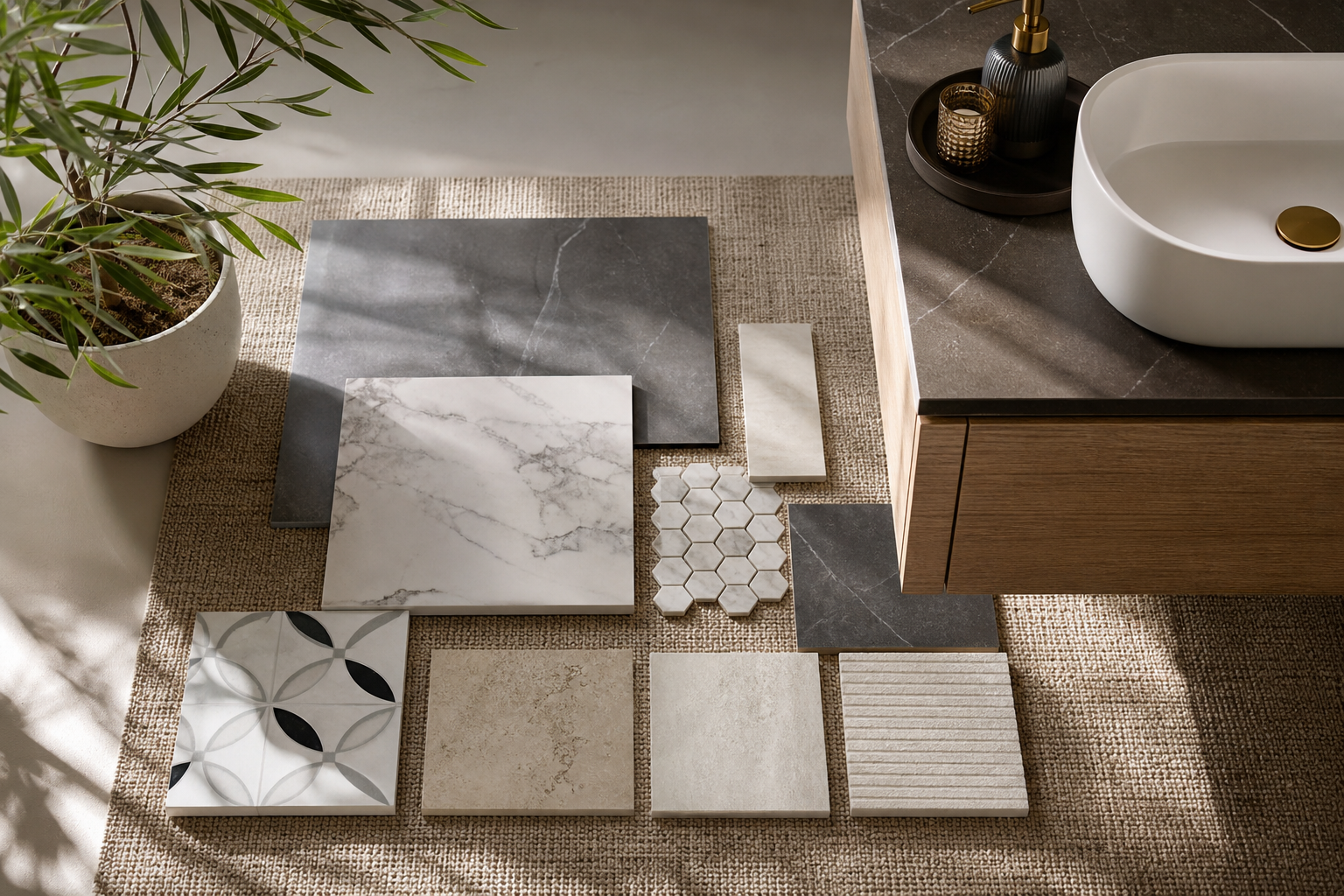
Bathroom and kitchen remodels usually get hung up on one question fast. Porcelain, ceramic, or natural stone? In Colorado Springs, that choice matters even more because your floor has to handle splashed water, tracked-in grit, temperature swings, and daily traffic without turning into a maintenance headache. If you are searching for the best bathroom kitchen tile Colorado homeowners can count on, the right answer is not one material for every room. It depends on moisture exposure, slip resistance, grout needs, and how well the subfloor is prepared before a single tile goes down.
Porcelain is usually the safest all-around choice for Colorado bathrooms and kitchens because it is dense, highly water-resistant, durable, and available in many slip-resistant finishes. Ceramic can work well in lighter-duty spaces and on tighter budgets. Natural stone offers a premium look, but it needs more maintenance, careful sealing, and a well-prepared subfloor to perform well in wet areas.
What tile options work best for my bathroom or kitchen in Colorado?
Porcelain works best for most busy bathrooms and kitchens in Colorado, ceramic fits many lower-traffic or budget-focused projects, and natural stone suits homeowners willing to trade more upkeep for a one-of-a-kind look. The best choice depends on how much moisture the room sees, how much maintenance you will tolerate, and how solid the installation base is.
Here is how I guide homeowners at O'Briens Carpet One Floor & Home in Colorado Springs:
- Porcelain tile. Best for high-moisture bathrooms, family kitchens, homes with pets, and heavy daily use.
- Ceramic tile. Good for powder baths, lower-traffic kitchens, and remodels where budget matters most.
- Natural stone. Best for homeowners prioritizing character and willing to seal and maintain it properly.
Not all tile products perform identically. That is where people get burned. A glossy wall tile, a budget ceramic floor tile, and a dense porcelain rated for wet floors are not the same thing just because they all come in boxes called tile.
According to the Centers for Disease Control and Prevention, falls are a major source of injury in the home, which is one reason bathroom and kitchen slip resistance should be treated as a performance issue, not just a style choice. In wet rooms, surface texture matters as much as the material category.
How does porcelain compare with ceramic and natural stone for moisture resistance?
Porcelain is generally the strongest performer around moisture because it is denser and less absorbent than standard ceramic. Ceramic still performs well in many kitchens and bathrooms if it is rated for floor use and installed correctly. Natural stone varies by species and usually needs sealing to slow water absorption and staining.
The Tile Council of North America recognizes porcelain as a dense ceramic product with very low water absorption. That matters in bathrooms where puddles, steam, and wet feet are routine.
Here is the practical comparison:
- Porcelain: Excellent for bathroom floors, shower-adjacent floors, powder rooms, and kitchens with frequent spills.
- Ceramic: Good for many bathroom and kitchen floors, but product quality and density vary more. I am careful about placing lighter-grade ceramic in hard-use kitchens.
- Natural stone: Marble, limestone, travertine, slate, and granite all behave differently. Some are more porous and more prone to staining or etching.
In Colorado Springs, our dry climate fools some people into underestimating water risk indoors. The issue is not outdoor humidity. The issue is repeated wetting in a confined space. A bathroom floor around a tub, toilet, or vanity does not care that the air outside is dry.
In Colorado Springs, especially in family neighborhoods from Briargate to Fountain, we often see kitchen floors dealing with melted snow, road sand, and water dripped from bottles and pet bowls. That mix is hard on both tile surfaces and grout, which is why material choice and sealing details matter.
Which option is easiest to maintain in a kitchen or bathroom?
Porcelain is usually the easiest to live with long-term, ceramic is close behind, and natural stone takes the most regular attention. The biggest maintenance difference often is not the tile itself. It is the grout joints, the surface finish, and whether the material needs periodic sealing.
Homeowners often compare tile faces and forget the full system. In real life, you clean the whole floor, not just the tile field.
Maintenance by material:
- Porcelain: Low maintenance. Routine sweeping and damp mopping are usually enough. Many porcelain products do not require the same sealing routine as stone.
- Ceramic: Also fairly easy, though some lower-cost products can show wear differently over time depending on glaze and body type.
- Natural stone: Highest maintenance. Many stones need sealing, pH-appropriate cleaners, and faster cleanup of spills to reduce staining or etching.
Grout deserves special attention:
- Cement-based grout can absorb moisture and discolor over time if not sealed and maintained.
- Epoxy grout resists staining better, but it can cost more and requires skilled installation.
- Lighter grout looks clean and bright at first, but it can show traffic and kitchen spills faster.
- Wider joints can create a more forgiving installation over some tile sizes, but they also create more grout to clean.
Most buyers asking about the best bathroom kitchen tile Colorado options are really asking a maintenance question without realizing it. They want something that still looks good after kids splash at the sink, dogs run through the kitchen, and holiday cooking leaves a mess behind.
If your home also has pets and heavy daily wear, our guide on best flooring for multiple dogs can help you think through durability across rooms, not just tile areas.
A common mistake I see
Homeowners pick natural stone because they love the showroom sample, then use standard household cleaners and skip sealing schedules. The floor is not bad. The upkeep expectations were just not matched to the household.
What about slip resistance in wet bathrooms and busy kitchens?
Slip resistance depends more on the tile's surface texture and finish than on the category name alone. Porcelain, ceramic, and stone can all be slippery or slip-resistant depending on the specific product. For bathrooms and kitchens, I usually steer people away from very polished surfaces on the floor.
This is where side-by-side comparison helps:
- Glossy ceramic or polished porcelain: Often better on walls than on wet floors.
- Matte or textured porcelain: Frequently a strong choice for bathroom and kitchen floors.
- Textured stone like some slates: Can offer traction, though maintenance can be more involved.
- Highly polished marble: Beautiful, but often not my first recommendation for active wet floors.
My plain advice is simple. Do not buy a floor tile based only on color and pattern. Put your hand on the surface. Ask how it behaves when wet. Ask where the manufacturer intends it to be used.
Myth: Any tile floor is automatically a smart choice for a bathroom or kitchen because tile is waterproof.
Reality: Tile surfaces may resist water well, but grout lines, transition points, substrate movement, and surface finish still determine real-world performance. Some tile products are far better suited to wet, active spaces than others.
How important are grout and subfloor preparation for long-term durability?
Grout and subfloor preparation are just as important as the tile you choose. A premium porcelain or beautiful stone can still fail early if the subfloor flexes, the underlayment is wrong, or the grout selection does not fit the room's use. Good installation is not a detail. It is the job.
The NSF notes that grout and tile surfaces in wet environments need proper cleaning and maintenance to support sanitary conditions, which is one more reason installation details matter in bathrooms and kitchens.
Subfloor preparation affects:
- Cracked tile
- Loose grout
- Lippage, where one tile edge sits higher than another
- Water intrusion at weak points
- Premature wear and movement
In kitchens and bathrooms, I want to know:
- Is the subfloor flat enough for the tile size being installed?
- Is the floor system stiff enough for ceramic, porcelain, or stone?
- Is the correct backer, membrane, or underlayment being used?
- Are movement joints and transitions being handled properly?
Natural stone usually demands the most from the structure beneath it. It can require a stiffer floor assembly than ceramic or porcelain. That is one reason stone is not automatically the right answer for every second-floor bathroom remodel.
Weak example: choosing a large-format tile because it looks modern, then laying it over an uneven subfloor to save time.
Stronger example: checking floor flatness first, correcting low spots, choosing the right mortar and grout, and matching the tile size to the room and substrate conditions.
If you want a better sense of how to evaluate workmanship before the project starts, our article on how to tell if a flooring installer will do the job right is worth reading before you sign a contract.
Bathroom and kitchen tile checklist before installation
- Confirm the product is rated for floor use, not just wall use.
- Ask about water absorption and slip resistance for the exact product.
- Choose grout color and type based on cleaning habits, not just appearance.
- Have the subfloor inspected for flatness, stiffness, and moisture concerns.
- Ask what underlayment or membrane will be used and why.
- Get a clear plan for sealing if you choose natural stone or grout that needs it.
John Hughes's Insights
I have been doing this work for more than 40 years, and I can tell you most tile regrets start before installation day. People either buy too much floor on looks alone, or they buy too little floor because someone told them all tile is basically the same. It is not. In my own hometown of Colorado Springs, I have seen budget ceramic do just fine in the right powder room, and I have seen expensive stone become a frustration in a busy family bath because nobody explained the maintenance. My rule is still the same as it has always been. The customer comes first, and that means telling the truth even if it is not the flashy answer. Good tile choice is about matching the room, the household, and the installation method. That is what holds up.
"The best tile is not the one that looks best under showroom lights. It is the one that still works for your family five years later." , John Hughes
How should Colorado Springs homeowners choose the best bathroom kitchen tile Colorado option for their remodel?
The best choice starts with honesty about how the room is used. For most homeowners in Colorado Springs, porcelain is the safest recommendation for bathrooms and kitchens because it handles moisture, traffic, and routine cleanup very well. Ceramic can be a smart value. Natural stone makes sense if you love its character and accept the upkeep.
Here is my practical selection advice:
- Choose porcelain if the room gets heavy use, frequent splashes, pets, kids, or tracked-in debris.
- Choose ceramic if the room is lighter-duty and you want a lower price point without moving away from tile.
- Choose natural stone if appearance is the priority and you are prepared for sealing and more attentive care.
- Choose matte or textured finishes for better traction in bathrooms and kitchens.
- Choose the installer carefully because poor prep can ruin even excellent tile.
Some homeowners also compare tile with luxury vinyl before making a final call, especially in kitchens. If that is part of your decision, our piece on where luxury vinyl plank makes the most sense in a busy home gives a fair look at where another floor may be better.
For many projects, the best bathroom kitchen tile Colorado buyers choose is not the most expensive tile in the store. It is the one that fits the room's moisture level, your cleaning habits, and the structure under the floor.
Frequently Asked Questions
Is porcelain better than ceramic for bathroom floors?
Usually, yes. Porcelain is denser and generally more water-resistant, which makes it a strong fit for bathrooms. Ceramic can still work well if it is a quality floor-rated product and the room is not especially demanding.
Is natural stone a bad choice for kitchens?
No, but it is a higher-maintenance choice. Some stones need regular sealing and careful cleaning. In a busy kitchen, that can be a drawback for some families.
What grout is best for kitchen or bathroom tile?
That depends on the tile, joint width, and use of the room. Many homeowners like stain-resistant grout options for kitchens. In wet spaces, I want grout and sealing choices discussed up front, not after installation.
Does Colorado's dry climate change tile performance?
It changes some surrounding conditions, but wet-room performance still comes down to spills, steam, cleaning habits, and installation quality. Dry outdoor air does not cancel out bathroom water exposure.
What is the best bathroom kitchen tile Colorado homeowners usually pick?
Most busy households do best with porcelain because it balances moisture resistance, durability, and lower maintenance. Ceramic and natural stone can also be right, but only in the right setting and with the right expectations.
Get help choosing the right kitchen or bathroom tile before installation
If you are weighing porcelain, ceramic, or natural stone and want honest guidance on the best bathroom kitchen tile Colorado option for your home, O'Briens Carpet One Floor & Home can help you compare materials, grout choices, and installation needs room by room. Book a free in-home flooring measure and consultation with a local Colorado Springs expert at https://www.obrienscarpetone.com.
Book your free in-home flooring measure and consultationExplore more, or reach out directly to O'Briens Carpet One Floor & Home in Colorado Springs, CO.