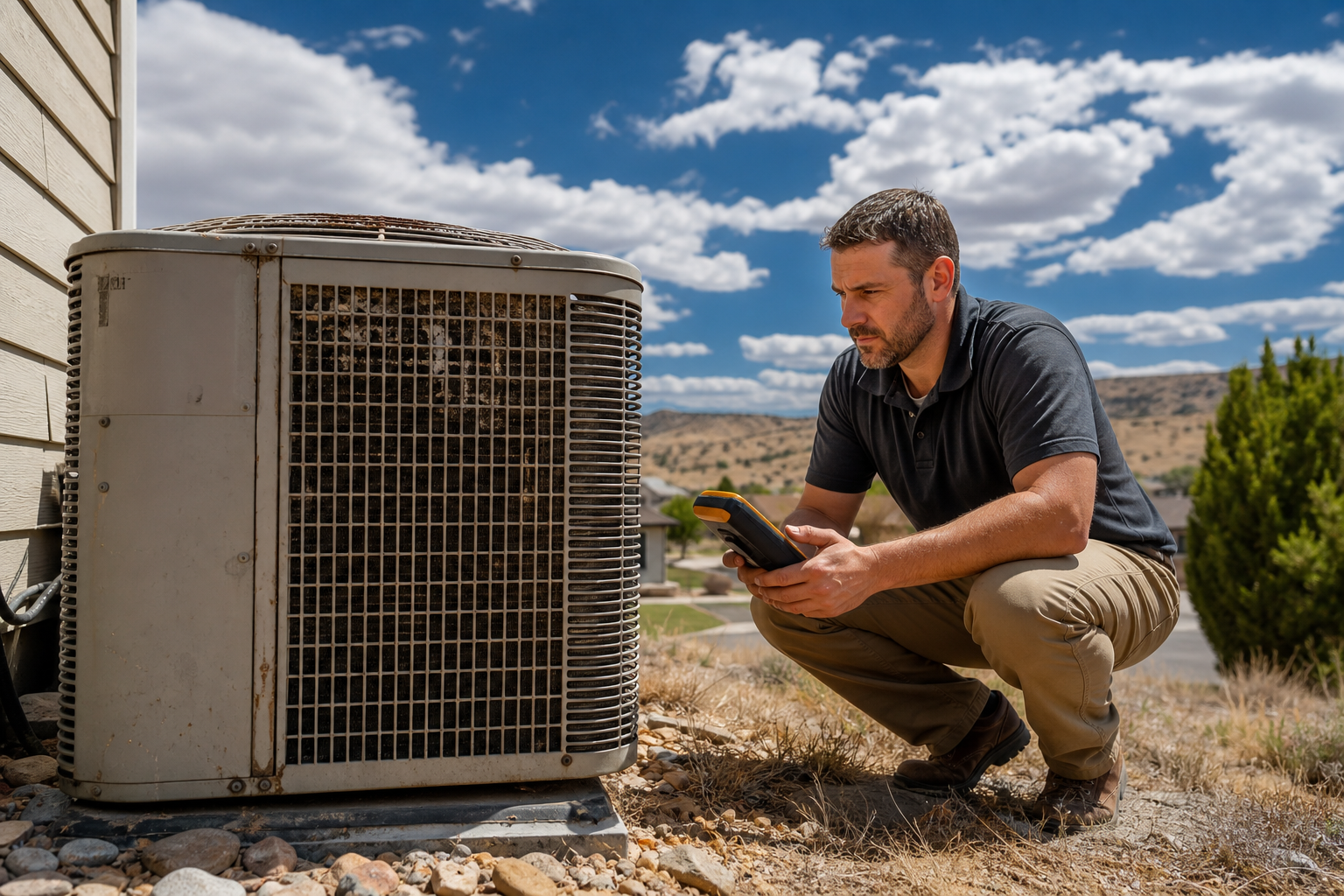
The warning sign showed up the usual way: the thermostat was set to 72, the vents were blowing warm air, and the AC had already needed two service calls since June. In a Colorado Springs summer, that is not a “wait and see” situation. The smarter question is not how old the unit is, but whether the risk of another breakdown and the cost of keeping it going have already passed the point where replacement makes more sense.
The best time to replace your AC is before it fails during peak summer demand, especially if repair calls are stacking up, energy bills are climbing, or cooling performance is slipping. If the system is becoming unreliable or expensive to run, replacing it on your schedule is usually better than waiting for an emergency in the middle of Colorado Springs summer cooling demands.
Use risk and operating cost, not age alone
Age matters, but it should never be the only rule. A 10-year-old system that cools evenly, runs efficiently, and rarely needs repairs may still be a good candidate for continued service. A 7-year-old unit that needs frequent fixes, struggles on hot afternoons, and drives up utility bills may already be a poor investment. That is the core of when to replace an AC system: compare what it costs to keep running against what you gain by starting fresh.
Colorado Springs homeowners feel this fast because summer loads are real. Dry heat, afternoon sun, and sudden temperature swings can push a weak system over the edge. Once a unit starts losing capacity, every hot spell asks more from it, and that is when small issues become expensive ones.
Warning signs replacement makes financial sense
Here are the signs that a repair bill may be the last one you should spend on an old system:
Replacement starts to make sense when you notice:
- Two or more repairs in the same cooling season
- Rising electric bills with no change in thermostat habits
- Uneven cooling, hot bedrooms, or long run times
- Weak airflow even after filter changes and basic maintenance
- Strange noises, hard starts, or short cycling
- Frequent refrigerant-related problems or leaks
- An AC that can no longer keep up on hot afternoons
That checklist matters because it points to declining performance, not just age. A system that short cycles or runs nearly nonstop is wasting energy and wearing itself out faster. If you are paying for repeated service calls and still living with poor comfort, the money is usually better spent on a new system that solves the root problem.
Myth: If the AC still turns on, repairs are always the cheaper choice.
Reality: A system can still run while costing too much to operate. Once repair frequency and efficiency loss combine, the total cost of keeping it alive can exceed the value of replacing it.
Repair versus replacement: the decision tree
Use this simple framework instead of guessing based on age alone.
Step 1: Is the current problem isolated and inexpensive? If the answer is yes, a repair may be reasonable.
Step 2: Has the system needed multiple repairs in the last 12 months? If yes, the pattern matters more than the single failure.
Step 3: Are your bills rising while comfort is dropping? That points to efficiency loss, which adds up every month.
Step 4: Would a breakdown during the next heat wave cause major disruption? If yes, replacement timing becomes a risk management decision.
Step 5: Is the system still supported by a local installer who can get parts and schedule service quickly? If delays are already becoming normal, the system is costing you time as well as money.
The mistake: waiting for a total failure
Homeowners often say, “I’ll replace it when it dies.” That sounds frugal, but in summer it usually means paying for emergency labor, making rushed equipment choices, and spending a few miserable days without reliable cooling. If the system is already unreliable, waiting rarely improves the math.
Why summer timing changes everything
The calendar changes the decision. During peak summer demand, installation schedules tighten, and urgent replacements get pushed behind other emergency calls. That can mean waiting longer for an appointment, settling for limited equipment choices, or dealing with extra discomfort while you wait for an opening.
Planning ahead gives you more control. You can compare options carefully, choose the right size and efficiency level, and schedule installation before the hottest stretch arrives. That is especially important in Colorado Springs summer cooling demands, where a sudden stretch of 90-degree afternoons can expose a weak system overnight.
In Colorado Springs, the hottest part of the season often lands after weeks of dry heat and strong sun exposure, which is hard on older AC equipment. Homeowners in areas like Briargate, Broadmoor, and the south side often notice the difference first in upstairs rooms, west-facing windows, and late-afternoon indoor heat buildup.
What homeowners gain from newer cooling technology
Replacement is not just about avoiding breakdowns. Newer cooling systems solve problems that older units cannot fix efficiently anymore.
Better variable-speed operation can hold steadier indoor temperatures instead of blasting on and off. Higher-efficiency equipment can lower operating costs, especially during long cooling stretches. Modern systems often manage humidity and airflow more consistently, which helps the home feel comfortable without constantly lowering the thermostat. And if your old unit struggles with uneven rooms, updated equipment may do a far better job matching the house’s real load.
That matters because an older system can still “work” while failing to deliver the comfort, efficiency, or reliability you expect. If the goal is fewer surprises and lower operating costs, newer technology gives you more than a replacement part. It gives you control.
When to replace an AC system before the next heat wave
For most homeowners, the best time to replace is when the warning signs are already clear, but before the system fails on the hottest day of the year. If repairs are becoming frequent, utility bills are drifting upward, and cooling performance is slipping, you are already in the replacement window. The smartest move is to act while you still have time to schedule installation on your terms.
That is the real answer to when to replace an AC system: not at a magic age, but at the point where risk, cost, and comfort all point in the same direction.
Marcus Bell's Insights
I tell homeowners this all the time: don’t wait for a dead AC to make the decision for you. I’ve seen plenty of systems that were technically “still running” but were chewing through electricity and service calls like crazy. If I’m seeing repeat breakdowns, weak airflow, or a unit that can’t hold temperature on a hot afternoon, I start talking replacement pretty quickly. That’s not upselling—that’s saving you from an emergency when the forecast is already turning ugly. The best jobs are the ones we plan before everybody else is calling at once.
Frequently Asked Questions
When is the best time to replace my AC?
The best time is before peak summer demand, while your current system is still working well enough to avoid an emergency. That gives you better scheduling, more equipment choices, and less risk of being stuck without cooling.
Should I replace my AC if it is still cooling but needs frequent repairs?
Yes, frequent repairs are often the clearest sign that replacement is becoming the better financial choice. Once service calls become routine, the total cost of ownership usually climbs fast.
Does a higher power bill mean I need a new system?
Not by itself, but a rising bill combined with longer run times or weaker cooling is a strong clue that efficiency is dropping. That is one of the most useful indicators when deciding whether to repair or replace.
Why not wait until the unit breaks completely?
Because emergency replacement during summer usually means more stress, longer wait times, and less control over the process. Planning ahead helps you avoid the worst-case scenario.
Ready to plan your replacement before the heatwave hits?
Get ahead of emergency failures with a clear, no-pressure estimate and a practical recommendation based on your system’s risk, efficiency, and repair history. Summit Comfort Heating & Air is here to help you make the call with confidence.
Book your AC replacement estimate — Comfort you can count on.