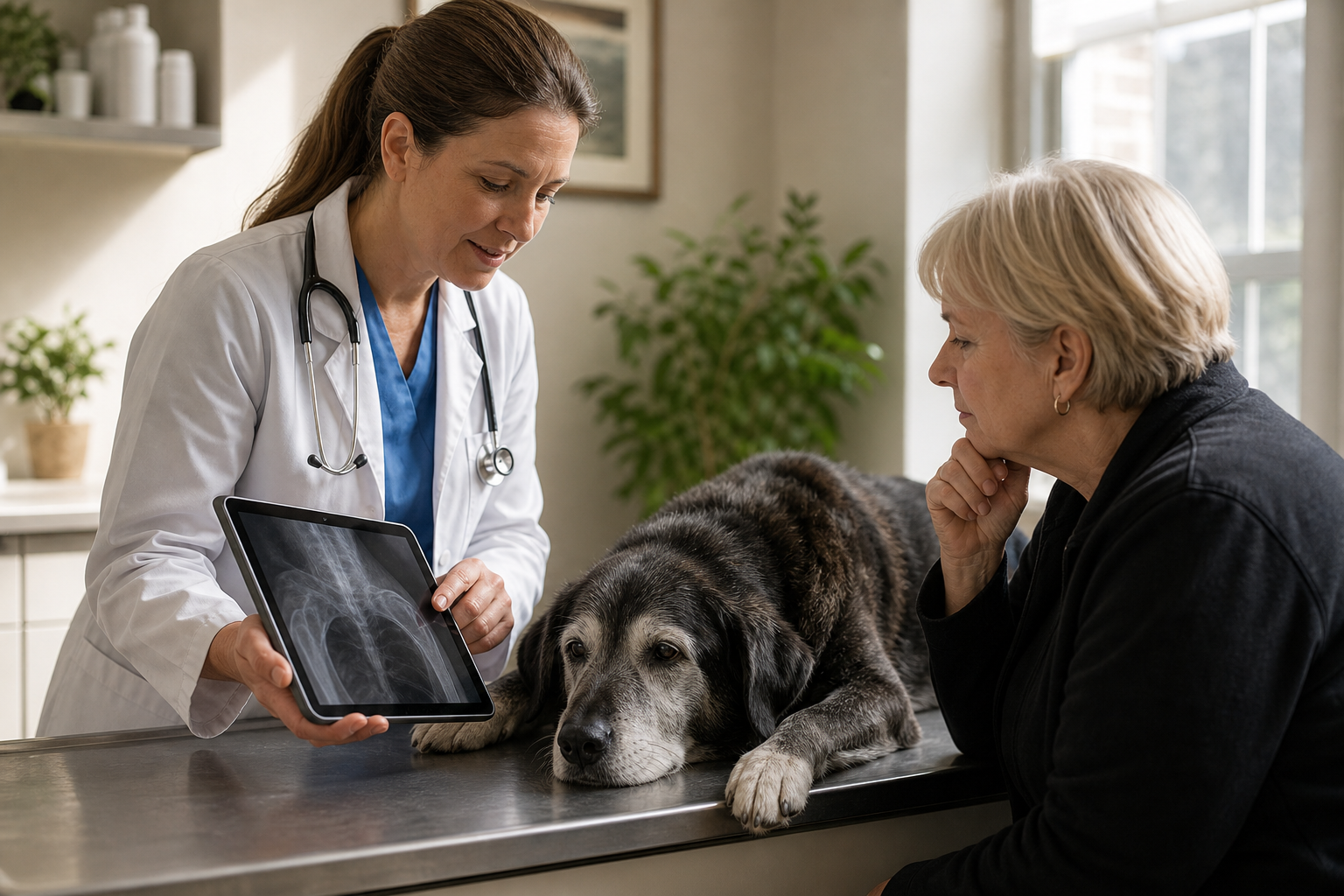
Seeing an older dog hesitate on the stairs, skip breakfast, or act quieter than usual can make any owner in Colorado Springs uneasy. Many families worry that one new symptom means a major surgery is next. In reality, surgical diagnostics for pets are often recommended for a different reason. They help veterinarians gather better information so treatment decisions are based on what is actually happening, not on guesswork.
Your pet may need surgical diagnostic services when an exam, lab work, or basic imaging does not fully explain a problem. Surgical diagnostics for pets can help a veterinarian confirm what is causing pain, a mass, bleeding, digestive trouble, or other concerning changes, so the next treatment step is based on clearer information, not an automatic decision to operate.
Why would my pet need surgical diagnostic services?
Pets may need surgical diagnostic services when symptoms are vague, persistent, or serious enough that a veterinarian needs more direct information to guide care. The goal is to answer important medical questions, such as what a mass is, where pain is coming from, or whether a problem can be treated medically, monitored, or may require a procedure.
For aging dogs and cats, the challenge is that many health issues do not announce themselves clearly. A pet may simply seem slower, less interested in food, or uncomfortable being picked up. Those changes can come from arthritis, dental disease, internal illness, growths, inflammation, or several issues happening at once.
Surgical diagnostics for pets may be considered after a veterinarian has already reviewed:
- Your pet's history and current symptoms
- A physical exam
- Basic lab work
- Digital x-rays or other imaging
- Response, or lack of response, to initial treatment
Sometimes those steps provide enough answers. Sometimes they narrow the possibilities but do not confirm the cause. That is where diagnostic procedures can become part of careful planning.
I like to say this plainly. More information is not the same thing as more treatment. Sometimes better diagnostics lead to surgery, and sometimes they help us avoid it.
What situations make additional diagnostics more likely for an aging pet?
Additional diagnostics are more likely when a pet has unexplained symptoms, a newly found lump, ongoing pain, internal changes seen on imaging, or a health problem that is not responding as expected. In these cases, more information can clarify urgency, options, and risk.
Common examples include:
- A mass or lump. An exam may confirm that a lump is present, but not what it is or how deeply it involves nearby tissue.
- Ongoing vomiting, diarrhea, or appetite loss. If symptoms continue despite supportive care, a veterinarian may need more information about the digestive tract or abdominal organs.
- Abdominal fluid or suspected internal bleeding. These findings may call for timely diagnostics to understand the source.
- Chronic pain with unclear cause. X-rays may show one issue while the pet's signs suggest something more.
- Changes in breathing, mobility, or behavior. Older pets often show subtle signs first, and those signs can reflect multiple possible conditions.
- Abnormal test results that need context. Blood work may show a problem, but not the full reason for it.
According to the American Animal Hospital Association, senior pets commonly benefit from more frequent monitoring because disease risk rises with age and many conditions progress quietly at first. AAHA senior care guidance generally supports regular assessment since earlier detection can improve decision-making, even when treatment choices remain complex.
How do imaging and testing clarify the next step?
Imaging and testing help veterinarians sort broad symptom lists into more specific possibilities. That matters because a pet with the same outward signs could need monitoring, medication, dental care, urgent support, or a procedure, and those choices depend on the information gathered.
At a general practice clinic, the diagnostic path often begins with the least invasive steps that fit the situation. These may include:
- Physical examination. This can reveal pain, dehydration, swelling, heart or lung changes, and oral disease.
- Lab work. Blood tests and other lab analysis can point to infection, anemia, organ changes, inflammation, or metabolic concerns.
- Digital x-rays. These can help assess bones, chest structures, abdominal patterns, and some masses.
- Sampling or procedural diagnostics. In selected cases, a veterinarian may recommend obtaining tissue, fluid, or direct internal information to answer a more specific question.
That last category is where people often get nervous. The phrase surgical diagnostics for pets can sound bigger than it is. In practice, it means using a procedure to learn more when non-surgical information is incomplete.
Here is a simple weak versus strong example.
- Weaker approach: "There is a mass. We should remove it because it is there."
- Stronger approach: "There is a mass. Exam findings and imaging tell us part of the story, but not enough to judge likely cause, involvement, or urgency. A diagnostic procedure may help us compare observation, medical care, referral, or surgery with better context."
That difference matters to owners who are trying to weigh comfort, cost, timing, and quality of life for an older pet.
Here in Colorado Springs and the Black Forest area, active senior dogs often keep hiking and climbing long after subtle health changes begin. High activity levels can make owners assume a limp, reduced appetite, or slower pace is "just age" or the dry climate. Sometimes it is age-related. Sometimes it is something that deserves a closer diagnostic look.
Does recommending surgical diagnostics mean surgery is inevitable?
No. A recommendation for surgical diagnostics does not automatically mean your veterinarian is steering your pet toward surgery. It means there is a gap between what is currently known and what needs to be known to make a sound treatment decision.
This is one of the most important points for owners to hear clearly. Diagnostic recommendations are about reducing uncertainty where possible. Depending on what those diagnostics show, the next step could be:
- Monitoring over time
- Medical management
- Changes in diet or supportive care
- Referral to a specialist
- A procedure or surgery
- Palliative or end-of-life planning
The American College of Veterinary Surgeons provides owner education showing that surgical evaluation often includes determining whether surgery is appropriate at all, not simply preparing for an operation. That distinction is especially important for senior pets with multiple health considerations.
My plain opinion is this. Owners deserve to know what question a diagnostic step is trying to answer before they agree to it.
Myth: If my vet mentions a surgical diagnostic procedure, my pet will probably end up having surgery anyway.
Reality: The purpose of a diagnostic recommendation is to improve decision-making. Sometimes the new information supports surgery. In other cases, it supports observation, medication, referral, or a different care plan entirely.
Why does individualized evaluation matter so much for older dogs and cats?
Individualized evaluation matters because age alone does not determine what a pet should or should not have done. An active 13-year-old dog and a frail 13-year-old dog may face the same symptom with very different risks, priorities, and appropriate next steps.
Veterinarians usually consider several factors together:
- Your pet's overall health status
- Current medications
- Heart, kidney, liver, or endocrine concerns
- Mobility and pain level
- The likely benefit of getting more information
- The urgency of the problem
- Your goals for treatment and quality of life
The AVMA reports that dogs and cats are living longer than in previous decades because of advances in preventive and clinical care. That is good news, but it also means more families are navigating complex age-related decisions instead of simple yes or no choices. Older pets often need thoughtful staging and risk discussion before any procedure is considered.
Transparent conversations matter here. If a veterinarian explains what is known, what is uncertain, what a diagnostic step may add, and what alternatives exist, owners are in a stronger position to make decisions that fit both their pet and their family.
Timber's Insights
I meet a lot of families who feel guilty for asking hard questions once a pet gets older. Please ask them. A good diagnostic conversation should not make you feel rushed or cornered. It should help you understand what your veterinarian is seeing, what is still unclear, and what information could actually change the plan.
At Ponderosa Veterinary Clinic, I think owners do best when they hear the reason behind a recommendation in plain language. "What are we trying to rule in or rule out?" is a smart question. "If we do not do this test, what uncertainty remains?" is another good one. Aging pets deserve thoughtful care, and their people deserve honest explanations that match the moment. That is how you make room for both compassion and clear decisions.
"Aging pets deserve thoughtful care, and their people deserve honest explanations that match the moment." Timber
What questions should I ask before agreeing to a diagnostic procedure?
Before agreeing to a diagnostic procedure, ask what question it is meant to answer, how it may affect treatment choices, what alternatives exist, and what risks or limitations should be considered. Those questions help you understand the value of the recommendation without assuming a single outcome.
Useful questions include:
- What are the main possibilities you are considering?
- What information do we already have from the exam, x-rays, and lab work?
- What would this diagnostic procedure add?
- If we do not do it now, what are the possible drawbacks?
- Could monitoring or another test be reasonable first?
- How might the results change the treatment plan?
- What should I understand about recovery, follow-up, or referral?
- What cost range should I plan for?
That last question matters, and it is fair to ask. Veterinary decisions live in the real world, and transparent cost discussions are part of transparent care.
Bring this to the appointment
- A list of symptoms and when they started
- Photos or measurements of any mass that has changed
- Videos of limping, coughing, pacing, or unusual behavior
- A current medication and supplement list
- Any prior test results from emergency or specialty visits
Frequently Asked Questions
Are surgical diagnostics for pets only for emergencies?
No. Some are considered urgently, but others are part of planned evaluation after an exam, imaging, or lab work leaves important questions unanswered.
Can older pets still be candidates for diagnostic procedures?
Sometimes, yes. Age by itself is only one factor. General health, the reason for the test, and the expected value of the information all matter.
Will imaging always show enough by itself?
Not always. Imaging can be very helpful, but some conditions still require tissue or fluid sampling, or other procedural information, to better understand the next step.
Is it reasonable to ask about alternatives?
Yes. Asking about alternatives, limits of testing, and what the results could change is an important part of informed veterinary decision-making.
What if I am worried about over-treating my senior pet?
That concern is common. A transparent discussion about goals, comfort, likely benefit, and remaining uncertainty can help you weigh whether additional diagnostics make sense for your pet.
Schedule an evaluation for your aging pet in Colorado Springs
If your dog or cat has new symptoms and you are trying to understand whether surgical diagnostics for pets might help clarify treatment options, the team at Ponderosa Veterinary Clinic can walk you through the reasoning step by step. Families in Colorado Springs, including the Black Forest area, often want honest guidance before deciding on testing, monitoring, or further care. We are here to explain recommendations clearly and help you ask the right questions. We Believe in a Compassion-First Approach. This article is general information, not medical advice. Talk with your veterinarian about your specific situation.
Request an appointment at Ponderosa Veterinary ClinicExplore more, or reach out directly to Ponderosa Veterinary Clinic in Colorado Springs, CO.