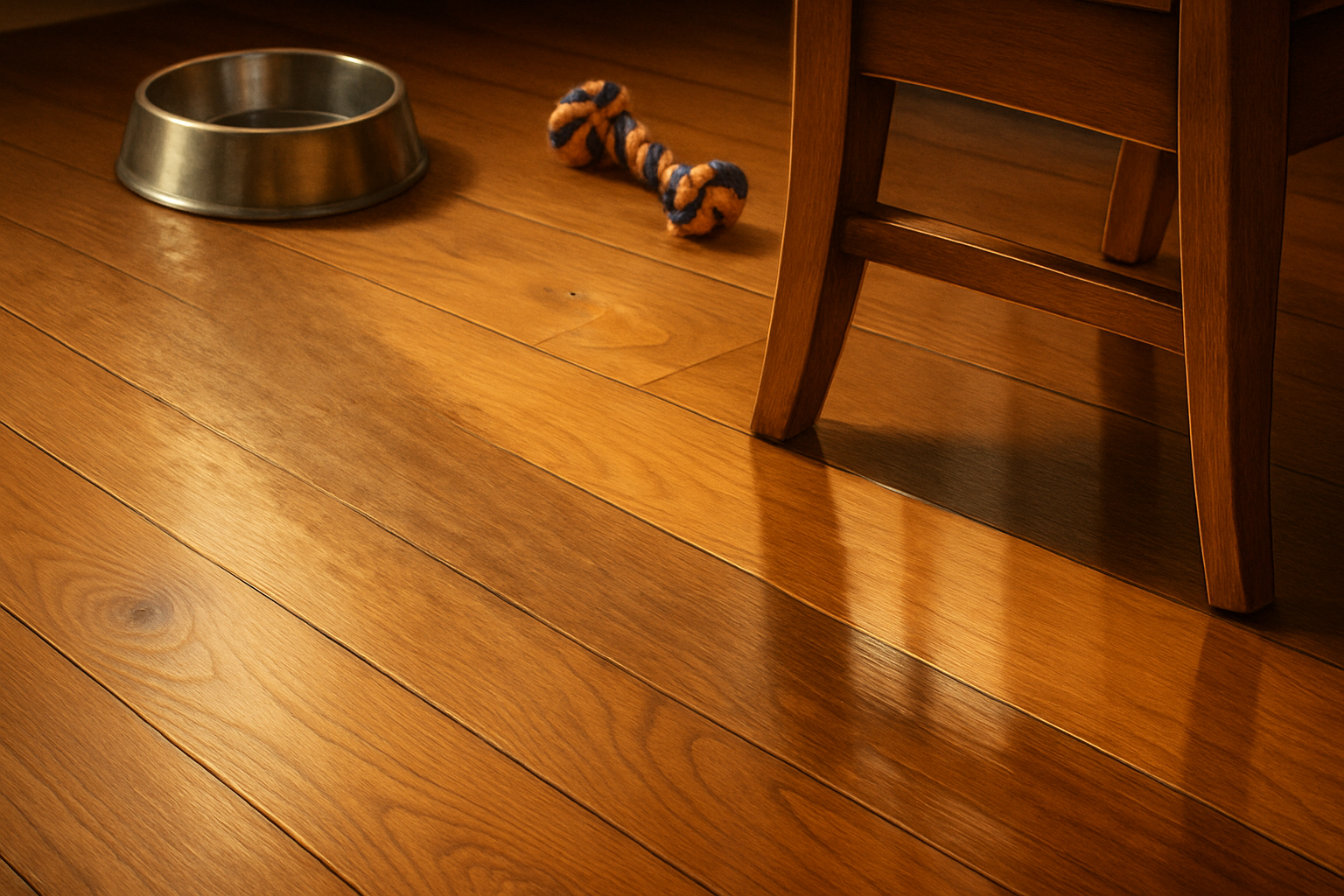
Hardwood floors with pets do not fail on a calendar. They fail when the finish wears thin in the paths your dogs and cats use every day, and that is why the best answer to when to recoat hardwood floors is usually based on wear patterns, not a fixed number of years. In Colorado Springs homes, I often see the first trouble spots show up at back doors, food bowl areas, hallways, and the route from the garage to the kitchen long before the rest of the floor looks tired.
Hardwood floors in a home with pets often need recoating about every 3 to 5 years in the busiest areas, but the right timing depends on finish wear, traffic, nail care, cleaning habits, and how quickly you address scratches and moisture. Recoat before the finish wears through to bare wood. If you wait until stain color changes, cupping, or deep gouges appear, you may be looking at full refinishing instead.
How often should hardwood floors be recoated in a home with pets?
Most pet-friendly homes should check for recoat timing every 2 to 3 years and expect many high-traffic floors to need it around the 3 to 5 year mark, while lower-traffic rooms may go 5 to 7 years or longer. The real answer to when to recoat hardwood floors is based on finish condition in the busiest lanes, not the best-looking corner of the room.
That difference matters. Recoating is preventive maintenance. Full refinishing is corrective restoration. A recoat adds a fresh protective layer over an existing finish that is still intact enough to bond well. Full refinishing means sanding down farther, removing more of the old finish, and dealing with exposed wood, heavier scratches, discoloration, or damage that has gone beyond the surface.
In an active Colorado Springs house with two dogs, kids coming in from the yard, and a cat that likes the sunny front window, the timeline usually shortens in specific zones:
- Entry paths from the backyard or garage.
- Main hallways between bedrooms and kitchen.
- Water bowl and feeding areas.
- The turn around sofas, beds, and stair landings where pets pivot.
- Sliding door areas where grit gets tracked in.
I have been in flooring for more than 40 years, and one pattern never changes. Floors usually tell you where they are wearing out long before they tell you they are ruined.
What is the difference between recoating and full refinishing?
Recoating refreshes the protective top finish. Full refinishing removes more of the old finish, sands the floor further, and corrects deeper wear or damage. If the wood is still protected, a recoat is usually the simpler, less disruptive job. If the finish is gone in spots, you are often past the maintenance stage.
Here is the practical distinction homeowners need:
| Service | What it addresses | What it usually does not fix | Typical disruption |
|---|---|---|---|
| Recoat | Light surface wear, dull traffic lanes, minor scratches in the finish | Deep gouges, black stains, exposed wood, pet urine damage, board movement | Shorter timeline, less invasive |
| Full refinishing | Worn-through finish, deeper scratches, broader surface correction | Structural subfloor problems or boards that need replacement | Longer timeline, more dust control and room preparation |
A weak example is waiting until the hallway feels rough under socks and the stain color looks lighter in the center. A stronger example is recoating when the sheen is clearly gone in pet traffic lanes but the color and wood are still protected.
If you are comparing maintenance expectations on an existing wood floor, our article on prefinished or site-finished hardwood in Colorado homes can help you understand why some finishes show wear differently.
What warning signs tell you it is time to recoat instead of wait?
The best time to recoat is when the finish looks tired, scratched, or thin in traffic lanes, but before you see bare wood, dark staining, or swelling. If water no longer beads on the surface in worn spots and the floor looks flat or hazy in pathways, your finish may be nearing the end of its useful protection.
Watch for these signs in pet homes:
- Dull, low-sheen lanes where dogs run to the door.
- Fine scratch patterns around food bowls, litter box approach paths, and furniture corners.
- Finish that looks patchy under window light.
- Areas that stay dirty-looking even after proper cleaning.
- Small spots where moisture seems to soak in instead of sitting on top briefly.
- Rough-feeling sections in front of exterior doors.
More serious signs suggest you may have waited too long:
- Gray, faded, or lightened wood in the center of a traffic lane.
- Black staining near pet accidents or water bowls.
- Cupping, edge lift, or board movement.
- Deep claw gouges that clearly cut past the finish.
In dry, high-altitude conditions like Colorado Springs, seasonal light and dust make these wear patterns easier to miss until afternoon sun hits at an angle. I tell homeowners in neighborhoods from Briargate to Broadmoor to look low across the floor, not straight down at it.
Colorado Springs adds two maintenance challenges at once. We get dry air, windblown grit, and snow or deicer tracked in during winter, then dust and backyard traffic during warmer months. In homes around Monument, Falcon, Fountain, and Security-Widefield, those entry points often determine recoating needs more than the age of the floor does.
What household habits make pets wear the finish faster or slower?
Traffic habits matter more than pet ownership by itself. Two medium dogs with trimmed nails and good entry mats can be easier on a floor than one large dog that sprints in from the yard across dry grit every day. The question of when to recoat hardwood floors always comes back to friction, moisture, and repeated traffic in the same lanes.
The biggest accelerators are simple:
- Nail length. The American Veterinary Medical Association advises regular nail trimming as part of pet care. On floors, long nails do more than click. They create repeated point pressure that shows up first in turns and launch points.
- Tracked-in grit. Tiny abrasive particles act like sandpaper under paws and shoes.
- Water exposure. Bowls, slobber, wet paws, and accident cleanup all matter.
- Cleaning methods. Overwet mopping and harsh cleaners can dull or weaken a finish.
- Room use. A family room used 12 hours a day will wear very differently from a guest room used 12 days a year.
One housecat can also create a problem zone. I see it near sunny windows where a cat jumps up and down from the same spot 10 or 20 times a day. That is not catastrophic wear, but it concentrates scratches in a small area.
Simple habits that extend the finish in a pet home
- Trim pet nails on a regular schedule.
- Use walk-off mats at exterior doors and keep them clean.
- Place mats under water bowls, but avoid rubber-backed products that trap moisture.
- Sweep or dust mop high-traffic lanes several times a week.
- Clean accidents promptly and follow up with a wood-safe cleaner.
- Use felt protectors on chairs and stools that share the same traffic lanes as pets.
- Keep indoor humidity steadier through seasonal swings. The U.S. Environmental Protection Agency generally notes 30 to 50 percent relative humidity as a healthy indoor range, and that range also helps limit some wood movement extremes.
Pet odors are a separate issue from finish wear, but the two can overlap if accidents sit too long. If that is part of your concern, our guide on controlling pet odors before you replace your floors walks through when cleaning is enough and when deeper flooring work may be needed.
Why can waiting too long turn a simple recoat into bigger restoration work?
Waiting too long lets the protective layer disappear in the exact spots that get hit hardest. Once traffic and moisture reach bare wood, the floor can stain, scratch deeper, and absorb damage that a maintenance coat cannot hide. That is the expensive part of procrastination. You move from preserving a finish to trying to restore a surface.
Here is the progression I see most often:
- Finish loses sheen in lanes.
- Fine scratches multiply and dirt clings more easily.
- Water resistance drops in worn areas.
- Color shifts appear where finish has worn thin.
- Wood begins to take direct damage.
- Repairs expand from coating work to sanding, board replacement, or stain correction.
A recoat done at year 3 or 4 in a busy pet home can preserve the look of the floor and reduce disruption. Waiting until year 7 or 8 with visible wear-through in key lanes may mean more sanding, more prep, and more interruption for the household. Those are not hard rules, but they are common outcomes.
I am old-school about this. Maintenance is almost always cheaper than rescue work.
If you need to evaluate who should inspect or work on your floor, our article on how to tell if a flooring installer will do the job right before you sign can help you ask better questions about process and experience.
How should Colorado Springs homeowners check their floors year by year?
A simple annual check is enough for many homes, and homes with multiple pets should look twice a year at the busiest zones. You do not need a complicated schedule. You need a repeatable inspection habit that catches finish wear early.
Use this timeline:
- Every 6 months. Check doorways, hall turns, bowl areas, and favorite pet routes in natural side light.
- Every 12 months. Compare photos from the same angle. If a lane looks flatter, hazier, or lighter, note it.
- At 2 to 3 years. If you have active dogs, ask for a professional opinion before visible wear-through starts.
- At 3 to 5 years. Many busy homes are in the recoat window, especially in central living areas.
- At 5 to 7 years. Lower-traffic spaces may still be fine, but heavily used lanes need close review.
If you are already planning other work in the home, such as a remodel or room-by-room flooring update, it helps to understand how pros map rooms and transitions. Our breakdown of what happens during a professional flooring measure shows the level of detail that keeps projects accurate.
Frequently Asked Questions
Can I wait until I see scratches everywhere before recoating?
No. Surface scratches alone are not the issue. The key is whether the finish is still protecting the wood. If you wait until traffic lanes look worn through, feel rough, or show color change, you may miss the maintenance window and move into refinishing territory.
Does having cats mean the same recoating schedule as having dogs?
Usually not. Dogs tend to create more concentrated traffic wear, especially near doors and hallways. Cats often create smaller wear zones at jump points, litter approach areas, and sunny windows. In both cases, when to recoat hardwood floors depends on how those zones are wearing, not on the pet label alone.
Want a local expert to show you how we judge recoat timing?
If you are trying to figure out when to recoat hardwood floors in a Colorado Springs home with pets, we can help you look at the actual wear patterns, traffic lanes, and finish condition instead of guessing by age alone. At O'Briens Carpet One Floor & Home, we will show you what we look for, what points to recoating versus more involved restoration, and how local traffic and climate affect the timeline.
Book a free in-home flooring measure and consultation