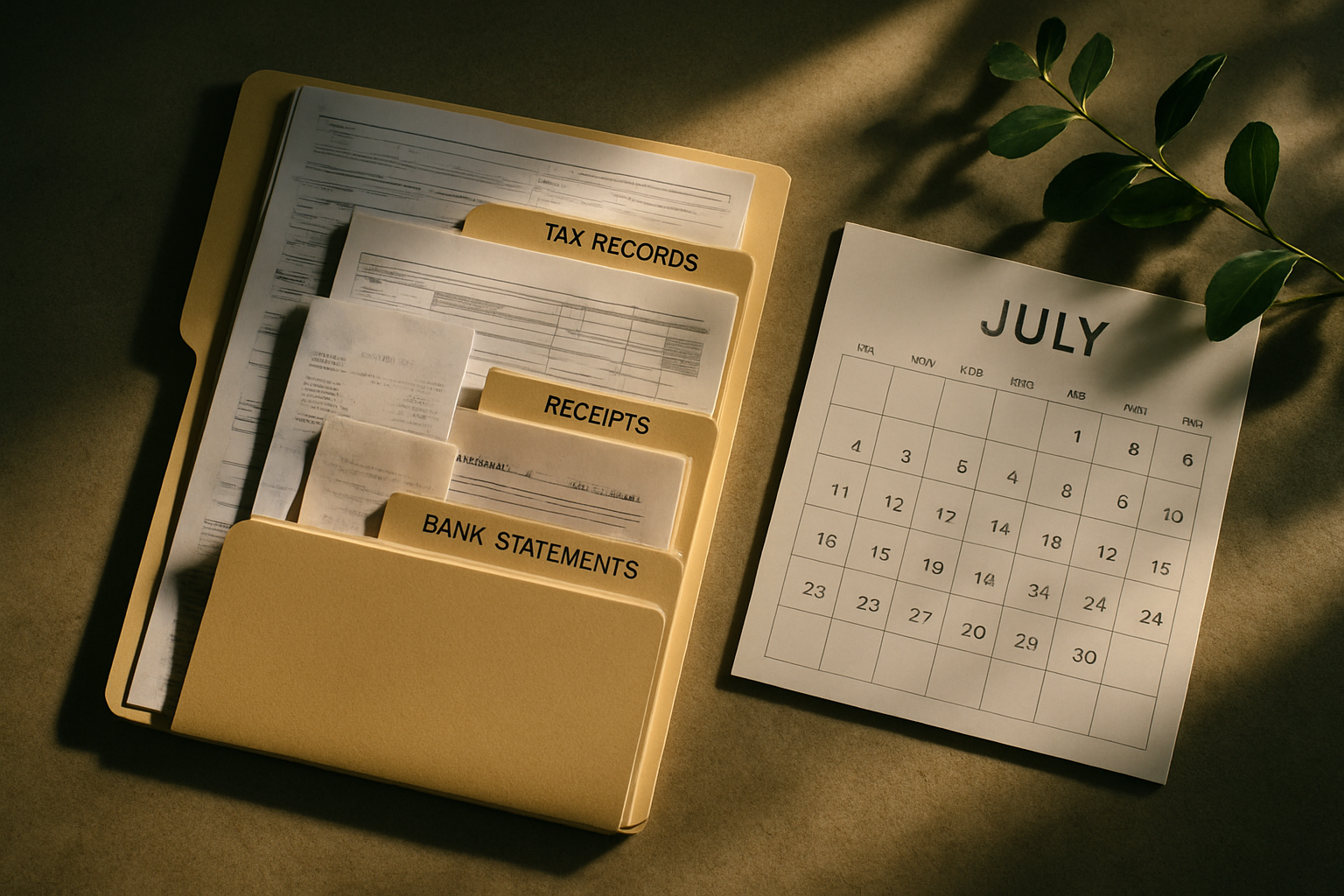
Summer is when a lot of people in Colorado Springs finally get a little breathing room to sort the stack. Business is still moving, but there is often just enough space to clean up folders, download statements, and figure out what is missing before year-end pressure shows up. If you are concerned about possible IRS questions later, this is one of the smartest times to organize your IRS compliance records Colorado Springs files while the details are still fresh.
To prepare for a possible IRS compliance review, keep records that verify income, deductions, credits, and tax payments. That usually means bank and credit card statements, bookkeeping reports, receipts, invoices, payroll records, prior returns, and copies of IRS correspondence. Complete, dated records make it much easier to answer IRS questions accurately than trying to rebuild facts from memory after a notice arrives.
What records should I keep to prepare for a possible IRS compliance review?
Keep the records that prove what you earned, what you paid, what you deducted, and when each transaction happened. For most individuals and small businesses in Colorado Springs, that means tax returns, income records, expense support, payment confirmations, and any IRS letters already received.
If I am helping someone respond to tax questions, I usually start with five categories:
- Income records. W-2s, 1099s, K-1s, sales reports, invoices, deposit records, settlement statements from payment processors, and bookkeeping income reports.
- Expense records. Receipts, vendor invoices, bank and credit card statements, canceled checks, mileage logs, and documentation showing the business purpose.
- Tax filing records. Signed copies of filed federal and state returns, supporting schedules, depreciation schedules, and workpapers used to prepare the return.
- Tax payment records. EFTPS confirmations, canceled checks, IRS account transcripts, extension payment confirmations, and estimated tax payment records.
- IRS correspondence. Every notice, letter, fax, upload confirmation, and mailing receipt connected to the issue.
For business owners, I would add payroll reports, quarterly payroll tax filings, contractor forms, sales records, owner draw documentation, and loan records. Good IRS compliance records Colorado Springs business owners keep are usually not fancy. They are simply complete, readable, and easy to match to the numbers on the return.
According to IRS Publication 583, businesses should keep records that support the income, deductions, and credits shown on returns. The IRS also notes in Publication 552 that records should generally be kept as long as they may be needed for federal tax purposes. Those are simple rules, but they matter a lot in real life.
Core file set to maintain
- Last 3 to 7 years of filed tax returns and attachments
- Year-to-date bookkeeping reports, profit and loss, balance sheet, general ledger
- Monthly bank and credit card statements
- Receipts or invoices for larger, unusual, or frequently deducted expenses
- Payroll summaries and payroll tax filings
- Estimated tax and extension payment proof
- IRS and Colorado tax agency letters
Why does documentation matter more than memory after an IRS notice arrives?
Documentation matters because the IRS reviews numbers, dates, and support, not recollections. A complete file lets you verify what actually happened. Relying on memory weeks or months later often leads to missing details, inconsistent explanations, and time-consuming reconstruction.
Here is the practical difference.
Relying on memory: You remember that a charge at an office supply store was for business, but you cannot explain which client project it related to, whether any personal items were included, or why the amount does not match the bookkeeping category.
Relying on records: You have the receipt, the card statement, and the bookkeeping entry. The note says it was printer toner, mailing supplies, and file folders purchased for quarterly client packets on July 18. That is a cleaner answer.
The same goes for income. If deposits into your bank account do not neatly match the gross receipts on the return, complete records can show the reason. One deposit may include a loan transfer, owner contribution, reimbursement, or payment collected in a prior period. Without the backup, it is easy for a question to get bigger than it needs to be.
I tell clients this all the time: the IRS usually is not grading your memory. It is comparing numbers and looking for support.
In Colorado Springs, summer is a useful organizing window. Before back-to-school schedules, year-end deadlines, and holiday slowdowns hit, many local families and small business owners can still gather statements, scan receipts, and clean up bookkeeping while the current year activity is easy to identify.
Which income, deduction, and payment records are most important to retain?
The most important records are the ones that tie directly to numbers on a tax return or explain a mismatch an IRS reviewer might notice. Focus first on income proof, deductible expense support, and evidence that taxes were paid on time and in the correct amount.
For income, keep:
- W-2s, 1099s, K-1s
- Customer invoices and sales receipts
- Point of sale and merchant processor reports
- Bank deposit detail
- Records of non-income deposits, such as loans, transfers, gifts, or owner contributions
For deductions, keep:
- Receipts and invoices showing vendor, date, amount, and item purchased
- Proof of payment from bank or card statements
- Mileage logs with dates, destinations, and business purpose
- Home office support, if applicable, such as utility and square footage calculations
- Asset purchase records for equipment, vehicles, furniture, and software
For tax payments, keep:
- Estimated tax payment confirmations
- Extension payment confirmations
- EFTPS records for payroll and business taxes
- Copies of checks and certified mail receipts if mailed
- IRS account transcripts when available
A useful data point here: the IRS reported it received more than 163 million individual income tax returns for tax year 2023, according to IRS filing season statistics. With that volume, documentation is how taxpayers distinguish their specific facts when a question comes up.
Common gap: keeping statements but not the underlying detail
A bank statement shows that money moved. It does not always show what was purchased, why it was deductible, or whether part of it was personal. Statements are important, but for many expenses you also need the receipt, invoice, or note explaining the business purpose.
What are the most common recordkeeping gaps that create problems later?
The most common gaps are missing receipts, mixed personal and business spending, incomplete mileage logs, weak bookkeeping descriptions, and lost IRS letters. These issues do not always seem urgent in the moment, but they make responses much harder if correspondence shows up later.
I see a few repeat problems over and over:
- Only keeping year-end totals. A tax return total without the monthly detail behind it is hard to defend or explain.
- Using one account for everything. Mixed personal and business activity creates confusion fast.
- No system for digital storage. Receipts are scattered across phones, email, glove boxes, and desk drawers.
- Forgetting payroll backup. Small employers may save payroll summaries but not the filings and deposit confirmations behind them.
- Ignoring older notices. A letter that seemed minor can become important context later.
One weak recordkeeping example is a folder called “Taxes” with random PDFs and screenshots. A stronger example is a folder by tax year with subfolders for income, expenses, payroll, tax payments, and IRS letters, plus consistent file names like “2025-04 Chase Statement” or “2025-06-12 Vendor Invoice 4582.”
Most people do not need a complicated system. They need one they will actually keep up with.
Myth: If the amount is small, I do not need to keep support for it.
Reality: Small items repeated across a year can add up, and small unsupported items can raise bigger questions about how the rest of the records were handled. Consistency matters.
How long should I keep tax and financial records?
Keep records at least as long as they may be needed to support a tax return, and longer when assets, payroll, property, or unresolved tax issues are involved. The exact timeline can vary, so the safest approach is to keep core tax records for multiple years and hold permanent or asset-related records even longer.
The IRS provides retention guidance in Publication 552 and other materials, but practical retention depends on the type of record:
- Filed returns and supporting documents: often kept for several years after filing
- Asset records: keep while you own the asset, plus the period needed after disposition
- Payroll records: often kept longer because multiple agencies may be involved
- Property and basis records: keep as long as they affect gain, loss, or depreciation calculations
- IRS notices and resolution documents: keep indefinitely if they relate to open questions, payment plans, or prior disputes
If you are unsure, I would rather see someone keep a clear digital copy a bit longer than throw something out too soon. Storage is usually cheaper than reconstruction.
The Taxlady's Insights
I have seen a lot of people feel embarrassed because their records are not perfect. Please do not let that stop you from getting organized now. Perfect is not the goal. Usable is the goal. If you can show where money came from, where it went, and how the return numbers were put together, you are already in a much stronger position than someone trying to piece everything together from memory and old emails.
My plain-English rule is this: if a number went onto a tax return, you should be able to trace it back. That does not mean every file has to look like a big-company accounting department. It means your records should make sense to another person reading them. Around Colorado Springs, I work with busy contractors, independent professionals, and families who just need a practical system they can maintain.
When should I get professional help with IRS compliance records in Colorado Springs?
Get professional help if you have already received IRS correspondence, cannot match return numbers to source documents, have missing years of records, or run a business with payroll, contractors, or complicated deductions. Early help can improve how you respond and how quickly you assemble the right documents.
Situations where local assistance often makes sense include:
- You received an IRS letter and are not sure what records it is asking for
- Your bookkeeping does not match your filed return
- You have unfiled returns or missing prior-year support
- You paid taxes but cannot locate proof
- You run payroll or have independent contractor questions
- You need help pulling transcripts or organizing a response package
A local professional can also help you decide what not to send, how to organize what is relevant, and how to present records clearly. That matters. More paper is not always a better response. Better-organized paper is.
For people looking for IRS compliance records Colorado Springs guidance, this is where having someone nearby can help. A Colorado Springs firm that handles bookkeeping, tax prep, payroll, and IRS issues can often spot gaps quickly because they see the same local small-business patterns every year.
"Good records do not answer every tax question by themselves, but they give you a much stronger starting point than guesswork ever will." The Taxlady
Frequently Asked Questions
Do digital copies count, or do I need paper records?
Digital copies are often fine if they are clear, complete, and accessible. Make sure files are backed up, readable, and organized by year and category.
Should I keep every receipt?
Keep receipts and invoices for deductible expenses, especially larger purchases, recurring business costs, travel, meals where required, and anything that might need context beyond a bank statement.
What if my bookkeeping and bank statements do not match?
That is a good time to reconcile the accounts and identify the differences now. Common causes include owner transfers, loan proceeds, duplicate entries, and uncategorized transactions.
Are IRS notices part of my tax records?
Yes. Keep every notice, envelope if dated, response, upload confirmation, and mailing proof. Those documents can matter later if timing or scope becomes important.
Can records stop an IRS review from happening?
No. Good documentation does not prevent reviews. It does help you respond more clearly if questions come up.
Need help organizing IRS compliance records in Colorado Springs?
If you want help sorting records before IRS questions become harder to answer, or you have already received correspondence and need a clearer response plan, contact Your Taxlady, LLC in Colorado Springs. I can help you identify what records matter most, clean up disorganized files, and figure out your next step. Schedule a free initial consultation at taxladyllc.com. Less tax stress. Better books. Clearer next steps. This article is general information, not financial, tax, or insurance advice. Talk with a licensed professional about your specific situation.
Schedule a free initial consultationExplore more, or reach out directly to Your Taxlady, LLC in Colorado Springs, CO.