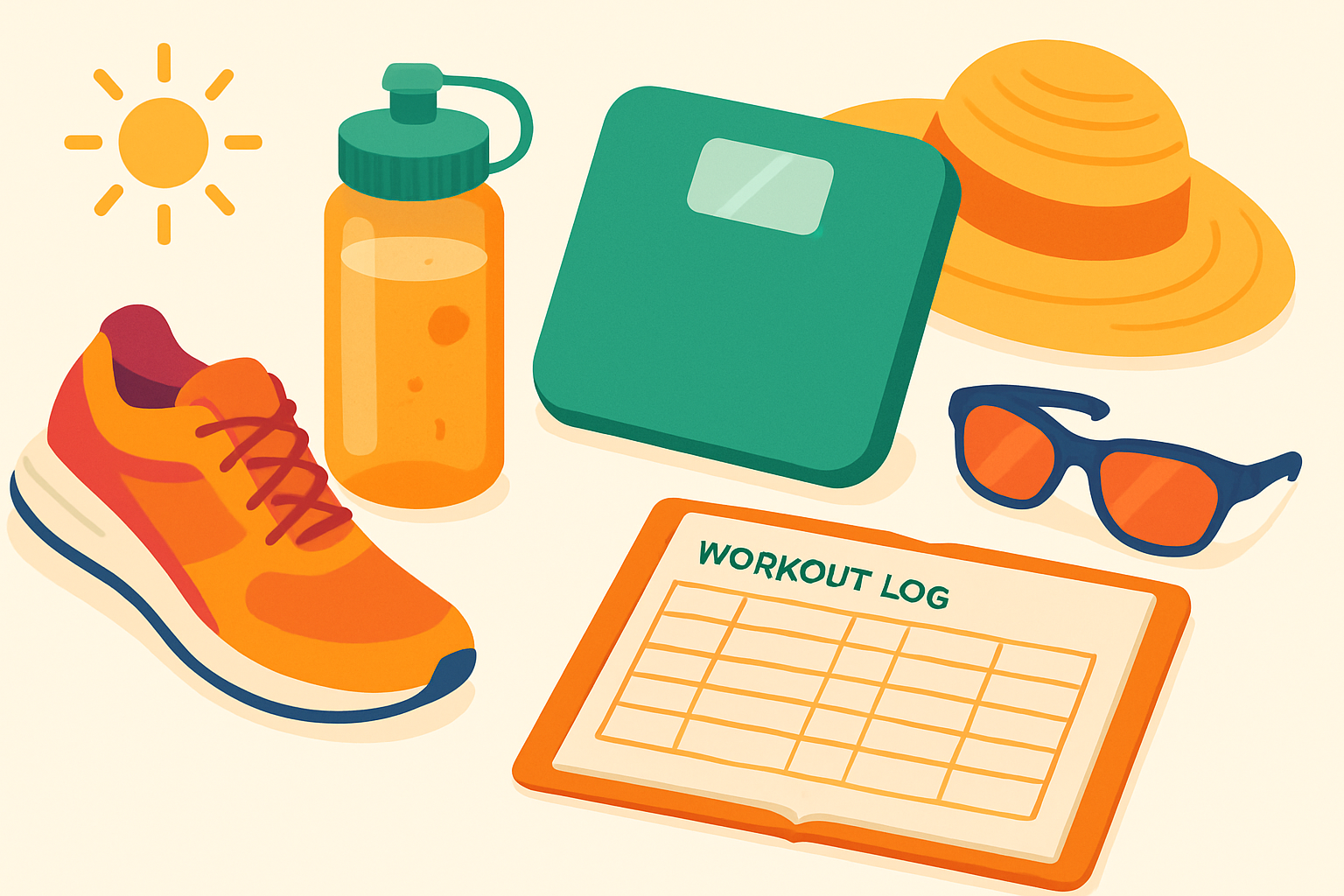
Back-to-back summer workouts in Monument can fool you fast. A trail run at Limbaugh Canyon one day, pickleball the next, then a long hike or ride over the weekend. You feel thirsty, you drink something, and you assume you are covered. That is the mistake. Thirst matters, but by itself it is an incomplete signal, especially during hot-weather training at altitude.
Active adults can tell if they are staying properly hydrated during summer exercise by using more than thirst. The best simple checks are urine color trends, body weight changes before and after workouts, and paying attention to symptoms that do not settle with fluids and rest. In most cases, oral fluids and electrolytes make sense first. If symptoms are persistent or more severe, medical evaluation matters.
If you want the short version of how to monitor hydration during summer workouts, here it is. Watch patterns, not one random moment. Check what your urine looks like over the day. Weigh yourself before and after longer or harder sessions. Notice headaches, dizziness, cramping, unusual fatigue, or a racing heart that hangs around. Those are real signals. Guessing is not a system.
How can active adults tell if they are staying properly hydrated during summer exercise?
Active adults can tell they are staying hydrated by combining three practical self-checks. First, track urine color trends instead of waiting to feel thirsty. Second, compare pre- and post-workout body weight. Third, pay attention to symptoms that persist even after rest and drinking fluids. That is the real answer to how to monitor hydration during summer workouts.
Thirst is useful, but it lags. The Centers for Disease Control and Prevention warns that people can become dehydrated and not notice it early enough, especially in heat. The American College of Sports Medicine has long emphasized planned hydration during exercise because sweat losses can outpace what thirst alone tells you to replace.
Here is the practical framework I want active adults around Monument to use:
- Urine color: Pale yellow is usually a better sign than dark yellow or amber.
- Body weight change: A drop after exercise suggests fluid loss.
- Symptoms: Persistent dizziness, nausea, confusion, or pounding headache should not be brushed off.
- Workout context: Heat, altitude, sun exposure, and back-to-back sessions increase your risk.
Monument and the Tri-Lakes area add two things that matter here. Summer sun is intense, and our elevation can dry you out faster than many people expect. A 75 degree afternoon in Monument can feel a lot different on an exposed trail than the number on your weather app suggests.
Why is thirst alone not enough during hot-weather training?
Thirst is a late and imperfect signal. During heat, altitude exposure, and higher sweat loss, you can be behind on fluid intake before your body tells you to drink. That is why active adults who rely only on thirst often miss the early stages of dehydration.
That does not mean thirst is useless. It means it should be one input, not the whole plan. According to the National Academies, daily total water intake from beverages and food is about 3.7 liters for men and 2.7 liters for women on average, though exercise, climate, and body size change individual needs. Summer training days in Monument can push your needs well above your usual baseline.
A common miss looks like this:
- You finish a morning workout slightly depleted.
- You drink casually through the day, but not enough to catch up.
- You head into an evening session already behind.
- Now thirst shows up, but performance, comfort, and judgment may already be off.
Common mistake
People wait until they feel “really thirsty” before taking hydration seriously. That sounds reasonable, but it is reactive. A better move is checking simple markers before, during, and after summer training. Most people do not need a fancy device. They need a repeatable habit.
I will say it plain. If your hydration plan starts only after you feel bad, you do not have a plan.
What does urine color actually tell you?
Urine color can give you a quick day-to-day hydration clue, especially when you look for trends instead of obsessing over one bathroom trip. In general, pale yellow often suggests you are in a reasonable range, while darker yellow or amber can mean you need more fluids.
This method is simple, but keep it honest. First morning urine is often darker. Certain vitamins, foods, and medications can change color too. So use urine color as a pattern check across the day, not a lab test.
A stronger way to use it:
- Check color by late morning and mid-afternoon.
- Compare it with your activity level and heat exposure.
- If it stays dark despite drinking, pay closer attention to symptoms and recovery.
Weak example: “My urine was dark once, so I must be dehydrated.”
Stronger example: “I had two hot workouts in 24 hours, my urine stayed darker than usual through the afternoon, and I also felt headachy and sluggish. I probably need more oral fluids, electrolytes, and rest, and I should monitor closely.”
How should you use pre- and post-workout body weight?
Body weight changes before and after exercise are one of the most practical ways to estimate sweat loss. If your weight is down after a workout, especially a longer session in the heat, that usually means you lost fluid. This is one of the most useful tools for how to monitor hydration during summer workouts.
The National Athletic Trainers' Association and sports medicine professionals commonly use this method because it is simple and objective. A loss of about 2 percent of body weight can begin to affect how you feel and function during exercise. For a 170-pound adult, that is roughly 3.4 pounds.
Use the method like this:
- Weigh yourself before exercise in similar clothing.
- Weigh yourself after exercise, before a big meal.
- Track the difference over several hot-weather sessions.
- Use the pattern to guide future drinking during similar workouts.
Example:
- Pre-run weight: 160 pounds
- Post-run weight: 158.5 pounds
- Change: 1.5 pounds lost, which suggests significant fluid loss
This is not about chasing a perfect number after every workout. It is about seeing what your body tends to lose in Monument summer conditions. That is useful information.
When are oral fluids and electrolytes usually the right first step?
Oral fluids are usually the first and most appropriate option for mild to moderate hydration needs during summer training. Water is often enough for shorter, easier sessions. Electrolytes can make more sense during longer workouts, repeated same-day sessions, or heavier sweat loss.
This is where people overcomplicate things. You do not need to turn every jog into a chemistry project. But you also should not ignore sodium and electrolyte losses if you are training hard in the heat.
Oral hydration often fits well when:
- You are doing exercise under about an hour at light to moderate intensity
- You can eat and drink normally
- Your symptoms are mild and improve with rest and fluids
- You are replacing routine sweat loss, not dealing with a larger issue
Electrolytes are often worth considering when:
- Your session is longer or more intense
- You are a heavy sweater
- You have visible salt stains on clothes or skin
- You are doing consecutive summer workouts
- You are spending hours outside in direct sun around Monument, Palmer Lake, or the Front Range trails
Myth: If I drink a lot of plain water, I have hydration handled.
Reality: Sometimes yes. Sometimes no. During longer hot-weather activity, replacing fluids without considering electrolytes may not match what you are losing in sweat.
Most active adults do well with a steady, boring plan. Drink before you are desperate. Replace what you lose. Use electrolytes when the session or sweat loss calls for it.
Which symptoms mean it is time to stop guessing and get medical evaluation?
Persistent or more serious symptoms should push you toward medical evaluation instead of self-managing indefinitely. Trouble thinking clearly, fainting, chest pain, repeated vomiting, severe weakness, or symptoms that do not improve with fluids and cooling are not the time for guesswork.
Watch for red flags such as:
- Confusion or unusual disorientation
- Fainting or nearly fainting
- Rapid heartbeat that does not settle
- Persistent dizziness
- Repeated vomiting
- Severe headache
- Very dark urine or very low urine output
- Muscle cramps that keep returning with worsening fatigue
The American Heart Association notes that heat-related illness can escalate quickly. If symptoms are significant or escalating, seek prompt medical care.
Here is the reality. A lot of people try to tough it out because they do not want to “make a big deal” out of it. That is exactly how small problems become bigger ones.
Antoinne Glover's Insights
I see the same pattern every summer. People tell me, “I drank water, so I figured I was fine.” Then you ask a few better questions. Did your urine stay dark? Did you lose weight after that long run? Did you try to stack three outdoor sessions in two days? Now the story changes.
I am not here to hype hydration. I am here to make it practical. If you are active in Monument, you need a system that works when life gets busy. A quick body-weight check. A real look at symptoms. A plan for fluids and electrolytes before you get into trouble. For some eligible people, medically supervised IV hydration may be worth discussing after a clinical assessment. But it is not a replacement for everyday hydration habits. Start with the basics. Do them consistently. That is what keeps you ahead.
Where does medically supervised IV hydration fit, if at all?
Medically supervised IV hydration may be considered for eligible individuals after clinical assessment, but it is not a routine replacement for drinking fluids. For many active adults, oral fluids and electrolytes remain the first line approach. IV hydration is one option, not the default answer for every athlete.
That matters. A lot of marketing around hydration gets sloppy. I am not interested in that. The smarter message is this:
- Routine needs: Usually handled with oral fluids, electrolytes, and better planning
- Special situations: Some people may want medical guidance if they are struggling after heat exposure, repeated activity, or ongoing hydration concerns
- Clinical setting: IV hydration should be medically supervised and based on individual assessment
At Prime IV Hydration and Wellness of Monument, that is the angle. Education first. Evaluation matters. If someone is an appropriate candidate, medically supervised IV hydration can be discussed as one possible option. Not because everyone needs it. Because some people want support after the basics have not been enough, or they want a clinician-guided conversation about what makes sense for them.
Frequently Asked Questions
How often should I check hydration markers during summer training?
For active adults, a daily check-in during hotter weeks makes sense. Midday urine color, how you feel, and body weight before and after key workouts can give you useful trends without becoming obsessive.
Is clear urine the goal?
Not necessarily. Constantly crystal-clear urine can mean you are overdoing fluids in some cases. Pale yellow is often a more practical target than trying to force completely clear urine all day.
Do I need electrolytes for every workout?
No. Shorter, easier sessions may only require normal fluid intake. Electrolytes are more commonly useful during longer, hotter, higher-sweat workouts or repeated sessions in one day.
What is the simplest method for how to monitor hydration during summer workouts?
The simplest method is to combine thirst with two other checks. Look at urine color trends and compare pre- and post-workout body weight. That gives you a much better picture than thirst alone.
Can medically supervised IV hydration replace drinking water?
No. It should not be treated as a routine replacement for normal oral hydration. It may be considered for eligible individuals after clinical assessment, depending on the situation.
Get clear on your hydration plan this summer
If you are active around Monument and you are still guessing about how to monitor hydration during summer workouts, get real guidance. Prime IV Hydration and Wellness of Monument can help you think through hydration habits, when oral fluids and electrolytes are usually enough, and whether medically supervised IV hydration is even worth considering for your situation. IV hydration and wellness therapy in Monument, Colorado — helping busy, active people feel their best. This article is general information, not medical or therapeutic advice. Talk with a qualified professional about your specific situation.
Schedule a consultation in MonumentExplore more, or reach out directly to Prime IV Hydration and Wellness of Monument in Monument, CO.