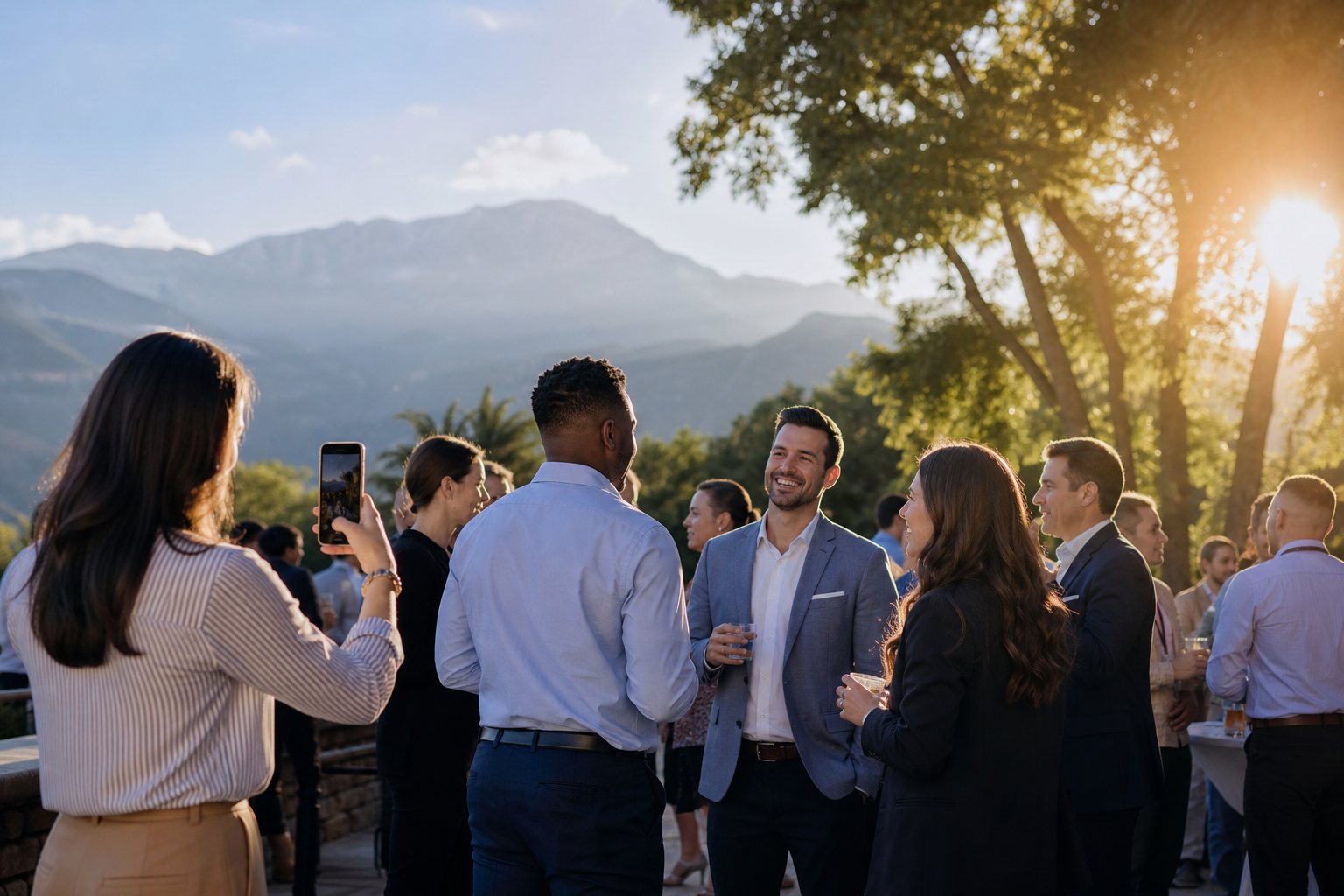
Planning a summer mixer in Colorado Springs is the easy part. Getting the right local people to notice it without sounding like you are pleading for attendance is the harder part. That is where better social posts for networking events matter. If every post says some version of "join us next Thursday," people scroll past it, especially during a packed El Paso County summer when calendars fill up with festivals, patio meetups, concerts, and family travel.
Social media helps promote local networking events by giving people a reason to care before the event, proof that something useful is happening during it, and takeaways worth sharing after it. The best social posts for networking events do not just repeat the date. They start local business conversations, show real participation, and keep the event visible in Colorado Springs after the room clears out.
How can social media help promote local networking events?
Social media helps local networking events most when it turns the event into an ongoing conversation instead of a one-day announcement. The job is simple. Build awareness before the event, social proof during it, and useful follow-up after it. That is what gets remembered in a city like Colorado Springs, where people tend to support businesses they recognize and keep seeing in familiar local circles.
If I were promoting a summer business networking event in Colorado Springs, I would connect the event page or article to a simple social distribution sequence. One page holds the details. The social content does the heavier work of making people care enough to show up or pay attention next time.
- Before the event: teach, preview, and invite discussion.
- During the event: document moments, people, and takeaways.
- After the event: recap insights, tag participants, and carry the conversation into the next week.
This matters because people rarely decide from one post. Sprout Social reports in its 2025 Index that 90 percent of consumers use social media to keep up with trends and cultural moments. A local networking event is a small trend in its own market. If your content looks useful and current, more people notice it.
Summer changes the posting rhythm in Colorado Springs. Downtown patios fill up, north-end professionals split time between work and travel, and a lot of people are checking LinkedIn or Instagram from a phone between meetings on Powers, Briargate, or Garden of the Gods Road. Short posts with one clear local point usually beat long generic invitations.
What should you post before a Colorado Springs networking event?
Before the event, post content that helps people picture the value of attending. The goal is not to repeat the date five times. The goal is to remove uncertainty, make the room feel relevant, and give local professionals an easy way to join the conversation before they ever walk in.
A practical pre-event sequence for social posts for networking events usually includes four types of posts:
- A local relevance post. Example: "What is one business challenge Colorado Springs companies are trying to solve this summer, hiring, referrals, or visibility?"
- A people-centered post. Highlight who tends to attend, such as service businesses, local consultants, home service owners, or nonprofit leaders in El Paso County.
- An expectations post. Explain the format. Casual patio meetup, structured roundtables, or a short speaker followed by open networking.
- A conversation starter. Ask a question attendees can answer in comments and continue in person.
Most businesses do not have an event promotion problem. They have a sameness problem.
The common mistake
Posting the same flyer graphic and the same caption across LinkedIn, Facebook, and Instagram. That saves time for ten minutes and costs attention for a week. LinkedIn can carry a business question. Facebook usually works better with community tone and tagging. Instagram needs a visual moment or short prompt people can react to quickly.
Here is a weak versus strong example.
- Weak: "Join us for our Colorado Springs Summer Networking Event on July 18 at 5:30 PM. Great opportunity to connect. Register now."
- Strong: "Colorado Springs business owners, what is harder right now, finding referrals that fit, staying visible locally, or keeping your marketing consistent? We are bringing that exact conversation into next Thursday's summer networking meetup in El Paso County. If you are coming, drop your answer below so the right people can find you before you arrive."
If your event already has a write-up, you can pull these prompts out of that page instead of inventing new copy from scratch. That is the same idea behind turning LinkedIn comment conversations into future thought leadership. A good event topic should keep producing content before and after the event itself.
How should social posts for networking events change during the event?
During the event, social content should prove that something real is happening in the room. The best live social posts for networking events capture momentum, highlight people, and give non-attendees a reason to watch for the next one. Live posting is not about flooding feeds. It is about documenting useful energy.
A simple live-event plan looks like this:
- Post one arrival photo or short clip early, showing the setting and first attendees.
- Share one quote or takeaway from a conversation.
- Tag featured attendees or partners when appropriate.
- Post one story-style update with a poll or question sticker.
- Capture one group moment near the midpoint, not only at the end.
If the event is at a brewery patio downtown, a coworking space near Garden of the Gods Road, or a venue near Interquest, say that plainly. Local specificity gets attention because it feels current, not recycled.
Jeff says this a lot because it is true. People trust documented activity more than promised activity.
"If your event only exists as a flyer before it happens and a thank-you post after, you missed the best proof. The room itself is the content." , Jeff
Keep live posts practical. A note like "hearing several Colorado Springs service businesses say referrals are steady, but follow-up is the bottleneck" is more useful than "great turnout tonight." If the room is small, that is fine. Specific beats inflated every time.
What should you post after the event to keep momentum going?
After the event, post content that helps the event keep working for you. A recap should not be a polite wrap-up followed by silence. The best follow-up social posts for networking events turn takeaways, attendee visibility, and future conversations into another week of useful local content.
Post-event content can include:
- A takeaway recap. Share three short themes people discussed.
- An attendee spotlight. Mention a business, insight, or introduction that stood out.
- A photo post with context. Name what people were talking about, not just that people gathered.
- A next-conversation post. Ask what topic should be covered at the next meetup.
- A bridge back to your main article or event page. This keeps event content connected to something permanent instead of letting it disappear into the feed.
According to LinkedIn Marketing Solutions, content that sparks conversation and shows real expertise tends to outperform empty announcements over time. That fits local events well. The recap is not admin work. It is authority content.
Myth: Once the event is over, promotion is over.
Reality: The follow-up is often where trust gets built. People who missed the event are deciding whether the next one is worth attending. If all they see is "thanks for coming," there is nothing to judge. If they see specific ideas, faces, and local relevance, the next event starts stronger.
How do you target a local Colorado Springs audience without sounding forced?
Local audience targeting works best when the location changes the content, not just the hashtags. In Colorado Springs and El Paso County, that means speaking to real business patterns, neighborhoods, and seasonal behavior. You do not need to stuff place names into every sentence. You need to show you know who this event is for.
Useful local targeting ideas include:
- Mention business clusters, such as downtown firms, north-end service providers, or B2B companies near Briargate and Interquest.
- Reference seasonal realities, such as summer travel, outdoor venues, military family schedules, or tourism traffic.
- Call out audience type, such as local real estate pros, health and wellness operators, trades, financial services, or nonprofit leaders.
- Use local partnerships or venue tags when relevant.
One local observation I would pay attention to right now. Colorado Springs keeps spreading business activity across a wider map than people assume. If your post only speaks to downtown, you miss a lot of owners and operators coming from the north side, Powers corridor, and surrounding El Paso County communities. That is why practical venue details, parking notes, and audience fit often matter more than polished event language.
Local targeting checklist for event posts
- Name the audience, not just the event.
- Use one real local detail that affects attendance or interest.
- Ask a question tied to local business conditions.
- Tag people, venues, or organizations selectively.
- Keep each platform's wording distinct.
How do you sequence posts across platforms without copying the same message everywhere?
Post sequencing works when each platform plays a different role. You can keep the same core event theme, but the format and wording should match how people use each channel. Copy-paste distribution usually feels lazy because it is lazy.
Here is a practical sequence for one Colorado Springs summer networking event:
7 to 10 days before
- LinkedIn: business question plus event context.
- Facebook: community-oriented invite with attendee type and local relevance.
- Instagram: simple visual with one sentence and a conversation prompt.
2 to 3 days before
- LinkedIn: what people will discuss or learn.
- Facebook: reminder with social proof, such as "last month we had local owners from home services, finance, and wellness."
- Instagram Stories: countdown, poll, or question box.
During the event
- Instagram Stories: short clips and room energy.
- Facebook: one photo update or attendee tag.
- LinkedIn: one insight or quote, if it fits the audience.
1 to 3 days after
- LinkedIn: recap with takeaways.
- Facebook: photo set plus appreciation and a question for next time.
- Instagram: carousel or reel with one strong takeaway.
A social sequence works better when it starts from a central article, event page, or recap. That gives every post a source to pull from and keeps the campaign connected instead of scattered. If you are also putting money behind the event, it helps to check the basics first. This is the same discipline I talk about in launch readiness for local service campaigns. The message, page, audience, and follow-up all need to match.
Jeff's Insights
I built postedby.ai after watching good local businesses spend money on promotion that disappeared the second they stopped pushing it. Events were one of the clearest examples. Owners would book a venue, send a few invites, post a flyer twice, then wonder why the event did not build any lasting visibility. The problem was not effort. The useful conversations never got turned into publishable content. That is why I keep pushing this simple sequence. Teach before the event. Document the room during it. Publish the takeaways after it. One decent event can become a week or two of honest content if somebody does the work of pulling the insights out. Most businesses do not need more hype. They need a repeatable way to make real activity visible.
Frequently Asked Questions
How many times should I post about a local networking event?
Usually 5 to 8 total posts across platforms is enough if the angle changes each time. More can work if the purpose changes, such as question, preview, live moment, recap, and next-topic prompt.
What is the best type of pre-event post?
A post that starts a useful business conversation tends to perform better than a plain invitation. Ask something attendees actually want to discuss in the room.
Should I post during the event even if turnout is small?
Yes. Focus on conversations, quotes, or specific takeaways. A smaller event with sharp content often looks more credible than a bigger event with vague posting.
Can one event article support multiple social posts?
Yes. That is one of the smartest ways to keep messaging consistent without repeating yourself. Pull questions, attendee highlights, venue notes, and recap points from the same source.
What platforms matter most for Colorado Springs business networking events?
LinkedIn and Facebook are usually the core pair for local business events. Instagram can help with visibility and atmosphere, especially for live updates and post-event visuals.
Do I need a separate article if I already made social posts for networking events?
Usually yes, if you want the content to keep working after the event. Social is where people notice it. A page on https://postedby.ai or your own site is where the content can keep earning visibility and support future posts.
Turn one Colorado Springs event into a full content sequence
If your current event promotion sounds repetitive, postedby.ai helps you turn one event page, article, or recap into useful social posts for networking events across LinkedIn, Facebook, and more. You can review pricing, check the FAQ, or reach out through contact if you want to see how the system works for your business. Be the source AI cites.
Start your free Starter plan