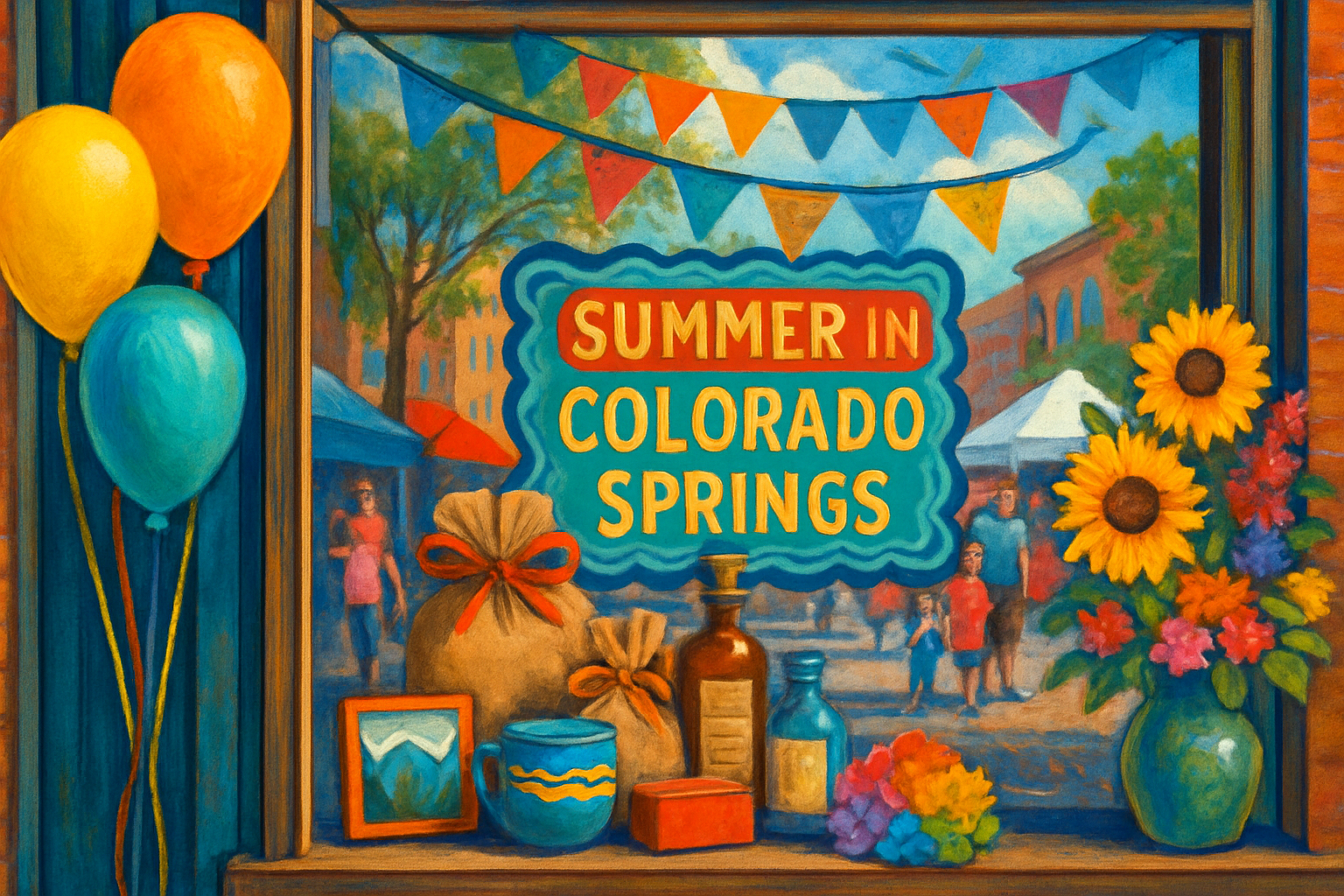
Generic event discounts disappear fast. At a packed summer street fair in Colorado Springs, most people walk past the same “10% off this weekend” signs without a second look because those offers could belong to any business, at any event, on any day. The best community event promotions Colorado Springs businesses run do something different. They feel like part of the event itself, like they belong in the same frame as the music, the booths, the volunteers, the families, and the reason everyone showed up.
Promotions work best during community events when they match the event’s purpose, audience, and energy. Strong offers include themed bundles, charitable tie-ins, family-friendly packages, and post-event redemption windows that extend the experience without feeling random. The closer the offer fits the crowd and the moment, the more likely people are to notice it and act on it.
What kinds of promotions work best during community events?
The best promotions during community events feel connected to why people are there in the first place. Offers tied to the theme, audience, or cause usually outperform unrelated discounts because they make immediate sense in the moment and feel less like an interruption.
If a business wants its community event promotions Colorado Springs strategy to land, the first question is not “What discount should we run?” It is “What brought this crowd here today?” A race crowd, a school fundraiser crowd, and an arts festival crowd are all gathering for different reasons. That should shape the offer.
Audience-first promotions usually fall into a few strong categories:
- Themed bundles that reflect the event itself
- Charitable tie-ins that support the same cause as the event
- Family or group offers that match how people attend
- Post-event redemption windows that let people act later
- Limited editions tied to the season, neighborhood, or celebration
The contrast is easy to spot. A hydration bundle at a charity 5K feels natural. A random luxury upsell with no connection to the runners, route, or cause feels pasted on. I have seen this over and over. People respond to offers that respect the moment.
Why do audience-first offers beat unrelated event discounts?
Audience-first offers win because they reduce friction. People understand them instantly, connect them to the event emotionally, and can picture using them. Unrelated promotions create a mental speed bump, and crowded event environments are terrible places to ask people to work harder to understand your message.
A community event is loud in the best way. Kids are running around. A band is starting its set. Someone is balancing lemonade, a folding chair, and a raffle ticket. Nobody wants to decode a promotion that feels detached from the event around them.
Here is the weak versus strong version:
- Weaker offer: “20% off select services this week only.”
- Stronger offer: “Festival Night Pack. Redeem by Monday for a themed photo, keepsake item, or event follow-up package inspired by today’s celebration.”
The stronger option gives the offer context. It tells attendees why it exists now. It belongs to the event.
According to the Data and Marketing Association, triggered and context-based messaging tends to outperform broad untargeted messaging because relevance improves response. Source: Data and Marketing Association. The lesson for community events is simple. Relevance is not a nice extra. It is the whole job.
How do themed bundles make community event promotions feel natural?
Themed bundles work because they translate the event into something tangible people can recognize and remember. Instead of offering a bare discount, you package products, services, or experiences in a way that mirrors the event’s story, season, or crowd behavior.
This is where thoughtful promotion planning really shows. Themed does not mean cheesy. It means connected.
Examples for Colorado Springs events might include:
- A “Race Day Recovery” bundle during a local 5K, built around what runners or supporters actually want afterward
- A “First Friday Family Pack” during an art walk or downtown gathering, designed for parents attending with kids
- A “Fan Weekend Bundle” during a school sports tournament, built for group attendance and repeat visits
- A “Holiday Lights Add-On” timed to winter events in areas like downtown Colorado Springs or Old Colorado City
Strong bundles usually share four traits:
- They use the language of the event
- They reflect how people attend, solo, as families, or in groups
- They solve a need that appears naturally that day
- They feel limited without feeling artificial
Most bad event offers are not too small. They are too disconnected. That is the problem.
A common mistake with themed offers
Businesses sometimes rename a standard promotion and call it event-themed without changing the substance. Attendees can tell. A real themed bundle should connect to the event experience itself, not just borrow the event name for decoration.
Colorado Springs events shift with the season, and your offer should too. A summer festival in the dry heat near downtown calls for a different kind of promotion than a crisp fall fundraiser on the north side or a winter community celebration where people are planning around colder evenings and faster exits.
How can charitable tie-ins support the event without feeling forced?
Charitable tie-ins work best when the donation link is simple, visible, and directly connected to the event’s mission. People respond well when a promotion helps them participate in the cause, not just purchase around it.
If the event is a school fundraiser, neighborhood cleanup, youth sports benefit, or nonprofit walk, your offer should echo that purpose in plain language. A portion-of-proceeds tie-in can work, but only if it is clear and specific.
Better charitable tie-in examples include:
- “For every event bundle redeemed by Tuesday, we donate $10 to the host nonprofit.”
- “This limited community package helps fund uniforms for a local youth team.”
- “Redeem after the event and part of your purchase goes back to the school program.”
Weaker versions are usually vague:
- “We support the community.”
- “A portion will be donated.”
Specificity matters because it builds trust. The Better Business Bureau Wise Giving Alliance consistently encourages clarity in charitable messaging so people understand where support is going. Source: BBB Wise Giving Alliance. If the event has heart, the promotion should show its work.
“The crowd can feel when something belongs,” as Framed Event would put it. “If the offer helps the same cause people showed up to support, it feels like part of the day, not a sales interruption.”
Why do post-event redemption windows often work better than same-day urgency?
Post-event redemption windows work because they respect the rhythm of the day. Community event attendees are usually busy, distracted, and focused on the experience in front of them. Giving them a short window after the event often creates a better response than pressuring them to act on the spot.
This is one of the smartest moves in community event promotions Colorado Springs businesses can make. At the event, awareness is the goal. After the event, action becomes easier.
A good post-event window might be:
- 24 to 72 hours after the event
- Through the following weekend
- Valid until a clear milestone, like “by Monday at noon” or “before the next home game”
Why it works:
- People can enjoy the event without stopping to decide
- The event memory is still fresh
- The time limit still feels real
- You avoid making the promotion compete with the event itself
I like redemption windows that feel like an encore, not a countdown timer. That is a better fit for community energy.
Myth: The best event offer must be redeemed immediately, or people will forget about it.
Reality: A short, thoughtful post-event window often works better because attendees are free to engage once they are home, less distracted, and still carrying the feeling of the event.
How should timing shape limited-time offers at Colorado Springs events?
Timing should follow event behavior, not just calendar urgency. The best limited-time offers match when attendees are most open to noticing, remembering, and using them, which is often before the event to build anticipation, during the event to create recognition, and just after the event to drive redemption.
Think in three stages:
- Pre-event: Introduce the offer in a way that sets expectations and fits the event story.
- At-event: Keep the message simple and visual so people understand it instantly.
- Post-event: Use a short redemption period to convert attention into action.
In Colorado Springs, local timing also depends on how people move through events. Outdoor attendance patterns shift with weather, school calendars, military family schedules, and seasonal tourism. A Saturday community festival in June may keep people out all day. A chilly evening fundraiser in November may send them home faster, which makes post-event redemption even more useful.
Checklist for planning event-connected offers
- State the event purpose in one sentence
- Name the primary attendee group
- Define one offer that fits the event theme
- Add one reason the offer exists now
- Choose a redemption window that matches attendee behavior
- If relevant, make the charitable connection specific and visible
- Test the message out loud. If it sounds generic, it probably is
Framed Event's Insights
I have always believed the strongest event promotions feel like they were born on the same street as the event itself. You can feel the difference. One sign looks like it got dropped in from a template. The other feels like it understands the crowd, the weather, the neighborhood, and the reason people came out on a Saturday in Colorado Springs instead of staying home.
If I were planning an offer around a community event, I would watch the crowd first. Are people moving fast or lingering? Are they there with kids, teammates, grandparents, or coworkers? Are they rallying around a cause? That tells you more than a marketing spreadsheet ever will. Good planning starts with paying attention. The offer should feel like part of the memory people take home, not background noise they forgot before they reached the parking lot.
Frequently Asked Questions
What kinds of promotions work best during community events?
Promotions tied to the event theme, audience needs, or charitable purpose work best. Themed bundles, mission-based offers, family packages, and short post-event redemption windows tend to feel more natural than unrelated discounts.
How long should a community event offer last?
A short window usually works best. Many businesses use same-day awareness with a 24 to 72 hour redemption period after the event so attendees have time to act once they are no longer distracted.
Do all event promotions need a discount?
No. Added value, bundles, event-exclusive packages, or a charitable give-back component can feel stronger than a straight percentage-off message, especially in a community setting.
What makes an event promotion feel forced?
An offer feels forced when it has no obvious connection to the event, uses generic language, or asks attendees to switch mental gears too abruptly. If the promotion could appear at any unrelated event and still read the same, it is probably too generic.
Why are community event promotions Colorado Springs businesses use different from generic seasonal sales?
Because local events come with a specific audience, mood, and setting. Effective community event promotions Colorado Springs brands run should reflect the neighborhood, season, and purpose of the gathering rather than relying on a one-size-fits-all sales message.
"The best event offer does not chase attention. It belongs in the scene."
Great community event promotions Colorado Springs businesses create are not louder than everyone else. They are simply more connected. They fit the crowd, the cause, and the feeling of the day. A themed bundle makes sense. A charitable tie-in earns trust. A post-event redemption window gives people room to respond after the music fades and the folding chairs go back in the trunk.
That is what thoughtful promotion planning looks like. It does not force a sale into a community moment. It builds an offer that feels like it was meant to be there.
Plan event offers that actually belong in the moment
If you want your community event promotions Colorado Springs strategy to feel connected instead of generic, K2Q Factory can help you shape the message and visuals around the real energy of the event. Bring us the event, the audience, and the atmosphere, and we will help you think through ideas that feel natural, memorable, and worth showing up for. Turn big moments into unforgettable visuals
Start the idea session at k2qfactory.comExplore more, or reach out directly to K2Q Factory in Colorado Springs, CO.